
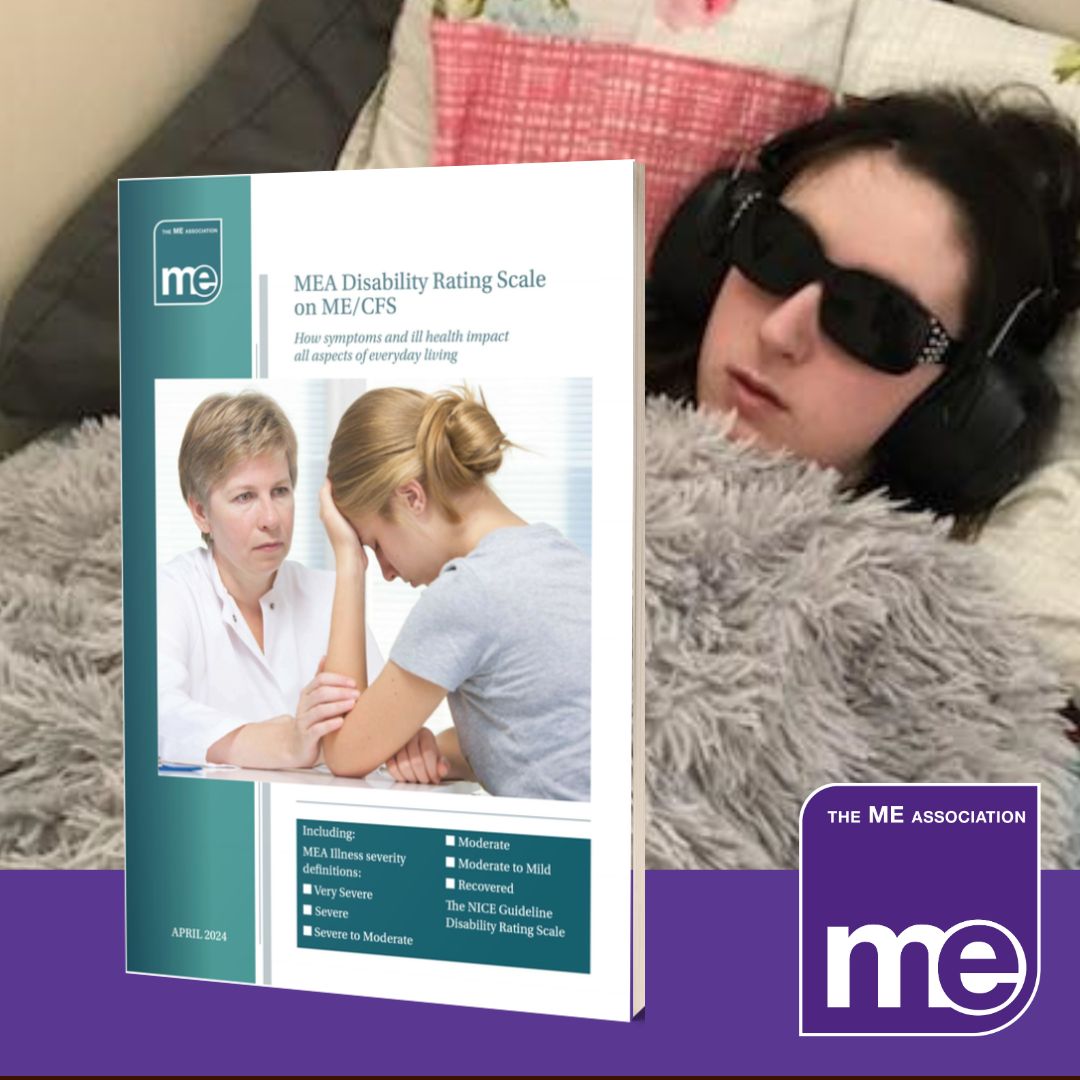
MEA Disability Rating Scale on ME/CFS – How symptoms and ill health impact
The MEA Disability Rating Scale on ME/CFS was written by Dr Charles Shepherd, Trustee and Hon. Medical Adviser to The ME Association.
Medical Disclaimer
This leaflet is not intended to be a substitute for personalised medical advice or treatment. You should consult your doctor whenever a new symptom arises, or an existing symptom worsens. It is important to obtain medical advice that considers other causes and possible treatments. Do not assume that new or worsened symptoms are solely because of ME/CFS or Long Covid.
This leaflet covers the following Illness Severity Definitions, followed by NICE Guideline Disability Rating Scale:
- Very Severe – 90-100% Disability
- Severe – 70-80% Disability
- Severe to Moderate – 40-60% Disability
- Moderate – 30% Disability
- Moderate to Mild – 10-20% Disability
- Recovered – 0% Disability
ILLNESS SEVERITY DEFINITIONS
Definitions of severity are not clear-cut because individual symptoms often vary in severity throughout the day, from day to day, and from week to week.
The main purpose of the disability rating scale is to help people with ME/CFS provide a short description as to how their symptoms and ill health are impacting on all aspects of everyday living – especially restrictions on mobility and personal care needs.
We have included six categories within the rating scale based on illness severities, and 10 descriptors as percentages which help to explain the degree of symptom severity and the impact on functional abilities.
This is not a symptom or ill-health rating questionnaire – although the type and severity of symptoms, and their impact on daily life, obviously forms the basis to how the 10 different descriptors are framed.
Definitions of severity are not clear-cut because individual symptoms often vary in severity throughout the day, from day to day, and from week to week. So it’s unlikely that every part of a single disability descriptor is going to be applicable all the time. You may therefore find that your disability levels fluctuate between two or three of these descriptors.
You can also add, if necessary, a note of explanation:
“The percentage quoted is the nearest one to my current level of disability. However, I would add that…”
The 10 descriptors cover practical tasks like standing, walking, washing, food preparation and eating. As the 10 descriptors are concentrating on disability rather than symptoms and ill-health, they are covering practical tasks like standing, walking, washing, food preparation and eating. This is because these are the kind of everyday tasks that are asked about when disability levels are being assessed for DWP benefits, etc.
In addition to assisting with applications for DWP benefits – PIP in particular – this information can be used when applying for disability aids and appliances, Blue Badge and bus pass applications, the provision of social care, and the ability to undertake employment or education.
As many of the key symptoms of Long Covid – i.e. debilitating fatigue, cognitive dysfunction/brain fog, dysautonomia, unrefreshing sleep – are also diagnostic features of ME/CFS, and some people with Long Covid meet diagnostic criteria for ME/CFS, this disability rating scale will also be helpful for some people with Long Covid.
It can also be used to monitor changes in the level of your disability over time.
VERY SEVERE
Very Severe ME/ CFS includes being confined to bed all day and night, incapable of living independently and unable to stand or walk.
100% DISABILITY
- Confined to bed all day and night and incapable of living independently.
- Unable to stand or walk.
- May have episodes of temporary paralysis and speech is likely to be affected.
- Requires a great deal of supervision and practical support – which may include disability aids and equipment such as a bed hoist.
- Requires continual assistance with all aspects of personal care and daily living – changing bed clothes, washing, toileting and feeding.
- Difficulty with swallowing and eating/chewing may result in tube-feeding.
- Cognitive function ( i.e. memory, concentration, information processing, word-finding ability) may be very poor. This limits the ability to communicate and take in verbal or written information.
- Often has hypersensitivity to chemicals and perfumes, light, sound, movement and touch and therefore requires a very low stimulus
- environment such as a quiet, dark room.
- Other ME/CFS symptoms such as nausea and pain involving muscles, nerves or joints can be very prominent and persistent.
90% DISABILITY
- Confined to bed for much or all of the time and incapable of living independently.
- May be able to stand for a very short period but not normally able to walk.
- May have episodes of temporary paralysis and speech is likely to be affected.
- Requires a great deal of supervision and practical support – which may include disability aids and equipment.
- Requires regular assistance with all aspects of personal care and daily living – changing bed clothes, washing, toileting and feeding.
- Cognitive function may be very poor. This limits the ability to communicate and take in verbal or written information.
- Often has hypersensitivity to chemicals and perfumes, light, sound, movement and touch and requires a very low stimulus environment, such as a quiet, dark room.
- Other ME/CFS symptoms such as nausea and pain can be very prominent and persistent.
SEVERE
Severe ME/CFS can include episodes of temporary paralysis and speech is likely to be affected.
80% DISABILITY
- Confined to bed or a chair for much or all of the time and incapable of living independently.
- May be able to stand for a short period and walk a few steps.
- May have episodes of temporary paralysis and speech is likely to be affected.
- May be able to carry out a few physical activities relating to personal care but not normally able to bath, wash or dress without assistance.
- Unable to prepare and cook a simple meal.
- Cognitive function may be very poor. This limits the ability to communicate and take in verbal or written information.
- Often has hypersensitivity to chemicals and perfumes, light, sound, movement and touch and may require a very low stimulus environment, such as a dark, quiet room.
- Other ME/CFS symptoms such as nausea and pain can be very prominent and persistent.
- Not able to work or study.
70% DISABILITY
- Requires bed or chair rest during the day and if able to leave the house normally requires wheelchair assistance.
- May be able to stand for a short period and walk a short distance.
- May have episodes of temporary paralysis and speech may be affected.
- May be able to carry out some physical activities relating to personal care including dressing, washing, and bathing.
- Unable to prepare and cook a simple meal.
- Cognitive function may be very poor. This limits the ability to communicate and take in verbal or written information.
- Often has hypersensitivity to perfumes and chemicals, light, sound, movement and touch and requires a low stimulus environment.
- Other ME/CFS symptoms such as pain and nausea can be prominent and persistent.
- Normally unable to work or study.
SEVERE to MODERATE
People with Moderate to Severe ME/CFS are usually confined to the house but have significant reductions in mobility, difficulty with remaining upright due problems with balance and/or dysautonomia.
People with Moderate to Severe ME/CFS may have significant cognitive dysfunction. This limits the ability to communicate and take in verbal or written information.
People with Moderate to Severe ME/CFS can experience moderate symptom severity with a significant symptom exacerbation following any form of mental or physical exertion.
60% DISABILITY
- Has significant restrictions on all aspects of everyday living.
- Not usually confined to the house but has significant reductions in mobility, difficulty with remaining upright due problems with balance and/or dysautonomia (see explanatory note below), and may therefore require wheelchair assistance, or walking aids, indoors and outdoors.
- Normally able to stand for a short period and walk a short distance.
- Likely to require help with some aspects of personal care and meal preparation/cooking.
- Normally able to wash and bathe and dress without assistance.
- Moderate level of symptoms at rest with a significant symptom exacerbation following any form of mental or physical exertion.
- May have significant cognitive dysfunction. This limits the ability to communicate and take in verbal or written information.
- May have hypersensitivity to chemicals and perfumes, light, sound and touch, and may require a low stimulus environment.
- Other ME/CFS symptoms such as pain and nausea can be prominent and persistent.
- Requires regular rest periods during the day.
- Unable to resume any form of meaningful regular employment or study but may be able to do small amounts of flexible light work or study from home.
50% DISABILITY
- Has significant restrictions on all aspects of everyday living.
- Not usually confined to the house but has a significant reduction in mobility, difficulty with remaining upright due problems with balance
- and/or dysautonomia (see explanatory note on the next page), and may
- therefore require wheelchair or other walking-aid assistance indoors and outdoors.
- Normally able to stand for a short period and walk a short distance .
- May require help with some aspects of personal care and meal preparation/cooking.
- Moderate symptoms at rest and a significant symptom exacerbation following any form of mental or physical exertion.
- May have significant cognitive dysfunction. This limits the ability to communicate and take in verbal or written information.
- May have sensitivity to chemicals and perfumes, light, sound and touch.
- Other ME/CFS symptoms such as pain and nausea can be prominent and persistent.
- Requires regular rest periods during the day.
- Unable to resume any form of meaningful regular employment or study away from home but may be able to do some light and flexible work or study from home.
40% DISABILITY
- Has significant restrictions on all aspects of everyday living.
- Not usually confined to the house but has a significant reduction in mobility, difficulty with remaining upright due to problems with balance and/or dysautonomia (see explanatory note below), and may therefore require occasional wheelchair assistance.
- Normally able to stand for a short period and walk a short distance.
- May require help with some aspects of personal care and meal preparation/cooking – but not on a full-time basis.
- Moderate symptom severity with a significant symptom exacerbation following any form of mental or physical exertion.
- May have significant cognitive dysfunction. This limits the ability to communicate and take in verbal or written information.
- May have sensitivity to chemicals and perfumes, light, sound and touch.
- Other ME/CFS symptoms such as pain and nausea can be prominent and persistent.
- Requires rest periods during the day.
- Unable to resume any form of meaningful regular employment away from home but may be able to do some flexible work or study from home.
MODERATE
People with Moderate ME/CFS are unlikely to be able to resume some form of meaningful regular employment or study away from home but may be able to do some flexible work or study from home.
30% DISABILITY
- Has restrictions on most aspects of everyday living.
- Not usually confined to the house but often has significant reductions in mobility, difficulty with remaining upright due problems with balance and/or dysautonomia (see explanatory note below), and may therefore require occasional wheelchair assistance.
- May require help with some aspects of personal care and meal preparation/cooking – but not on a full-time basis.
- Normally able to stand unaided for a few minutes and able to walk up to 100 metres.
- Mild to moderate symptoms at rest with a symptom
- exacerbation likely to follow any form of mental or physical exertion.
- May have significant cognitive dysfunction. This limits the ability to communicate and take in verbal or written information.
- Other ME/CFS symptoms such as pain and nausea can be prominent and persistent.
- Requires rest periods during the day.
- Unlikely to be able to resume some form of meaningful regular employment or study away from home but may be able to do some flexible work or study from home.
MODERATE to MILD
20% DISABILITY
- Has restrictions on most aspects of everyday living.
- Able to leave the house but mobility is still restricted and may have difficulty with remaining upright due problems with balance and/or dysautonomia (see explanatory note below).
- Normally able to stand for longer periods and walk 200 metres or more.
- Symptom exacerbation is likely to follow any form of mental or physical exertion.
- Cognitive dysfunction normally present to some degree. This may limit the ability to communicate and take in verbal or written information.
- Other ME/CFS symptoms such as pain and nausea can be disabling at times.
- May require regular rest periods during the day.
- No longer requires regular help with personal care and meal preparation/cooking.
- May be able to resume some form of meaningful regular employment or study away from home that does not involve prolonged or excessive exertion and/or carry out flexible work or study from home. In order to do either option, this may involve reducing or stopping all leisure or social activities and doing very little at the weekends.
10% DISABILITY
- Mild symptoms at rest.
- Has restrictions on some aspects of everyday living.
- Symptom exacerbation may follow mental or physical exertion.
- Normally able to stand for longer periods and walk more than 200 metres but may have difficulty with remaining upright due problems with balance and/or dysautonomia (see explanatory note on page 12).
- May require regular rest periods during the day.
- No longer requires help with personal care and meal preparation.
- Able to resume some form of meaningful regular employment or study away from home and/or carry out some flexible work or study from home without impacting on social or leisure activities.
RECOVERED
Following recovery, people would be able to resume full-time employment or education and social life.
O% DISABLED/RECOVERED
- Fit and well for at least three months.
- No symptoms at rest or after exercise.
- Capable of resuming full-time employment or education and social life.
- In relation to people with ME/CFS being able to do a specific task such as standing for a few minutes or walking 100 metres does not mean that the person can carry on doing so repeatedly throughout the day in a manner that is reliable and safe.
NOTE: Dysautonomia refers to dysfunction of the autonomic nervous system – which regulates heart rate and blood pressure. As a result, people with ME/CFS often have orthostatic intolerance (where they feel lightheaded or faint when moving from lying or sitting to standing and find prolonged standing difficult) and postural orthostatic tachycardia syndrome (where there is a large rise in pulse rate when moving from lying to standing).
PIP descriptors: These are the descriptors that are used to score points in the PIP assessment.
NICE Guideline Disability Rating Scale
Mild ME/CFS
People with mild ME/CFS care for themselves and do some light domestic tasks (sometimes needing support) but may have difficulties with mobility. Most are still working or in education, but to do this they have probably stopped all leisure and social pursuits. They often have reduced hours, take days off and use the weekend to cope with the rest of the week.
Moderate ME/CFS
People with moderate ME/CFS have reduced mobility and are restricted in all activities of daily living, although they may have peaks and troughs in their level of symptoms and ability to do activities. They have usually stopped work or education, and need rest periods, often resting in the afternoon for 1 or 2 hours. Their sleep at night is generally poor quality
and disturbed.
Severe ME/CFS
People with severe ME/CFS are unable to do any activity for themselves or can carry out minimal daily tasks only (such as face washing or cleaning teeth). They have severe cognitive difficulties and may depend on a wheelchair for mobility. They are often unable to leave the house or have a severe and prolonged after-effect if they do so. They may also spend most of their time in bed and are often extremely sensitive to light and sound.
Very Severe ME/CFS
People with very severe ME/CFS are in bed all day and dependent on care. They need help with personal hygiene and eating and are very sensitive to sensory stimuli. Some people may not be able to swallow and may need to be tube fed.