

Information and training for healthcare professionals
The ME Association is a national charity providing accurate and timely information, accessible support, topical campaigning, and vital biomedical research to help people with Myalgic Encephalopathy/Chronic Fatigue Syndrome (ME/CFS) and Long Covid.
ME/CFS presents as an acute illness – often following an infection – that can then become chronic with a devastating impact on functional ability and quality of life. HCPs have a key role to play in early recognition and diagnosis, ongoing support, symptom and illness management, and in the provision of clinician-led multidisciplinary specialist services.
The ME Association welcomes the 2021 NICE Clinical Guideline on ME/CFS. We are working positively with colleagues in the NHS and social care to implement the Guidelines’ recommendations. We are part of the 2022-25 Government initiative to improve healthcare provision, understanding, awareness and biomedical research investment, working with the Department of Health and Social Care and the established working groups.
Sign up for the free ME Medical Magazine and a copy of the Clinical and Research Guide (Purple Book) for Healthcare Professionals:

We have a comprehensive poster with expert information from Dr Charles Shepherd (Honorary Medical Adviser to the ME Association) to help primary healthcare professionals diagnose ME/CFS and provide NHS specialist referrals.

We are empowering change in regional ME/CFS and Long Covid services
The 2025 H4ME annual report has been published. This report presents the findings from the H4ME pilot program conducted over the previous year.
The team has played a crucial role in collaborating with healthcare organisations and people with ME/CFS/LC throughout various regions of the UK. A primary focus has been on engaging with service leads in Wales and England, who oversee services for ME/CFS and Long Covid. Our efforts have focused on advocating for the establishment of the NICE Guidelines when services are not adhering to them, or on enhancing specialist services when this is not evident. Moreover, direct engagement with individuals experiencing ME/CFS and Long Covid has enabled us to share their lived experiences effectively.
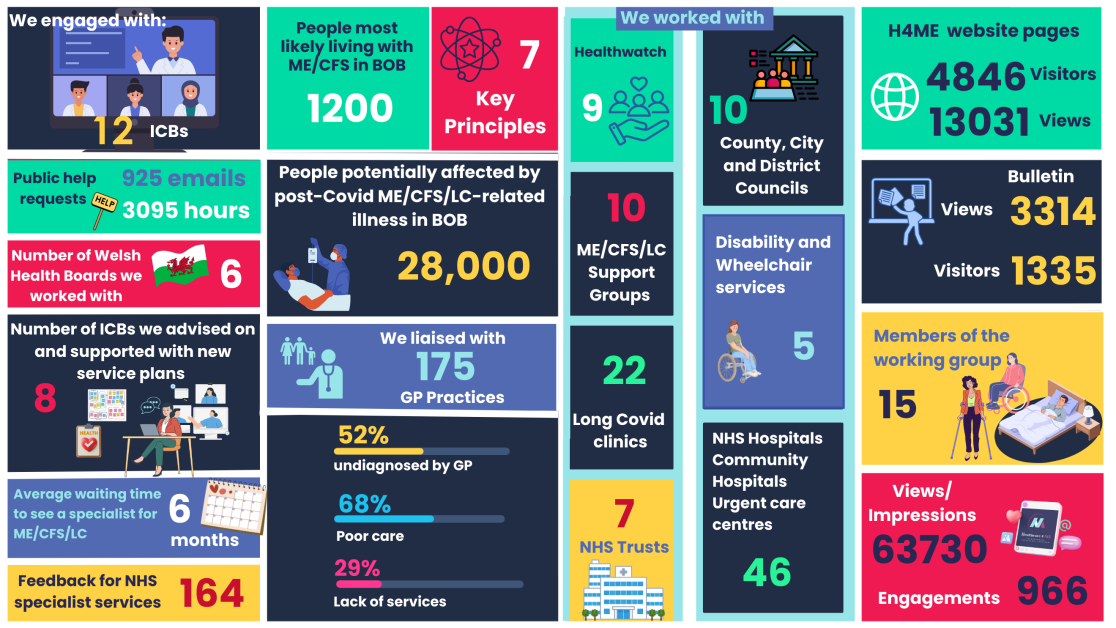
Over the past year, the Healthcare Team has conducted a pilot project aimed at enhancing understanding, accessibility of care, and service quality for individuals living with Myalgic Encephalomyelitis/Chronic Fatigue Syndrome (ME/CFS) and Long Covid.
This initiative documented significant outcomes over 12 months, evaluating existing health and social care provisions, identifying gaps, and proactively engaging with various services to inspire meaningful change. Despite the progress made, substantial challenges remain, including prolonged waiting times, inconsistent access to care, limited services for severe ME, and outdated treatment methodologies. Addressing these critical areas will be essential in the future.
Nonetheless, the project achieved significant advancements, including influencing service specifications, eliminating detrimental practices, and enhancing referral pathways and clinical guidelines. A notable strength of this initiative has been its emphasis on collaboration and advocacy.
This infographic is a quick overview of the results and outcomes achieved from the year-long project in numbers.
Key features of ME/CFS
How severe is it?
ME/CFS can cause have greater impact on quality of life and be more disabling than other serious medical conditions e.g., congestive heart failure, multiple sclerosis, and most cancers. 25% of people are severely affected and bedbound. Those very severely affected need 24-hour care and continuous support.
How many affected?
It has been estimated that 265,000 people in the UK have ME/CFS (0.4 per cent). It effects both children and adults irrespective of socio-economic background or ethnicity. 80% of those affected are women. It is not an uncommon condition, but many are undiagnosed.
Definition
ME/CFS is classified by WHO ICD-11 as a Post-viral Fatigue Syndrome and defined as being a disease of the nervous system. This is accepted by the NHS in each of the devolved countries and by the UK Government. The NHS digital classification system (SNOMED-CT) also recognises this classification and ME/CFS should be recorded as such on patient records.
NICE Guideline
We hope the 2021 NICE Guideline will mean greater awareness of ME/CFS by HCPs in the NHS and social care. It should mean that anyone who presents with key symptoms receives validation and understanding, a prompt diagnosis, ongoing tailored support, referral to a suitable and local secondary care service, and appropriate help with management.
Management
Sensible, safe, and tailored symptom and illness management strategies are the best way to avoid relapses, move towards greater stability, and experience functional improvements.
Symptoms
Key symptoms – such as post-exertional malaise – help to clinically differentiate ME/CFS from other medical conditions and exclude other causes prior to a diagnosis being made.
Diagnosis
A physical examination, review of patient history, and use of established clinical criteria, help to make an early and accurate diagnosis – which can increase the chances of a better prognosis.
Free booklet available

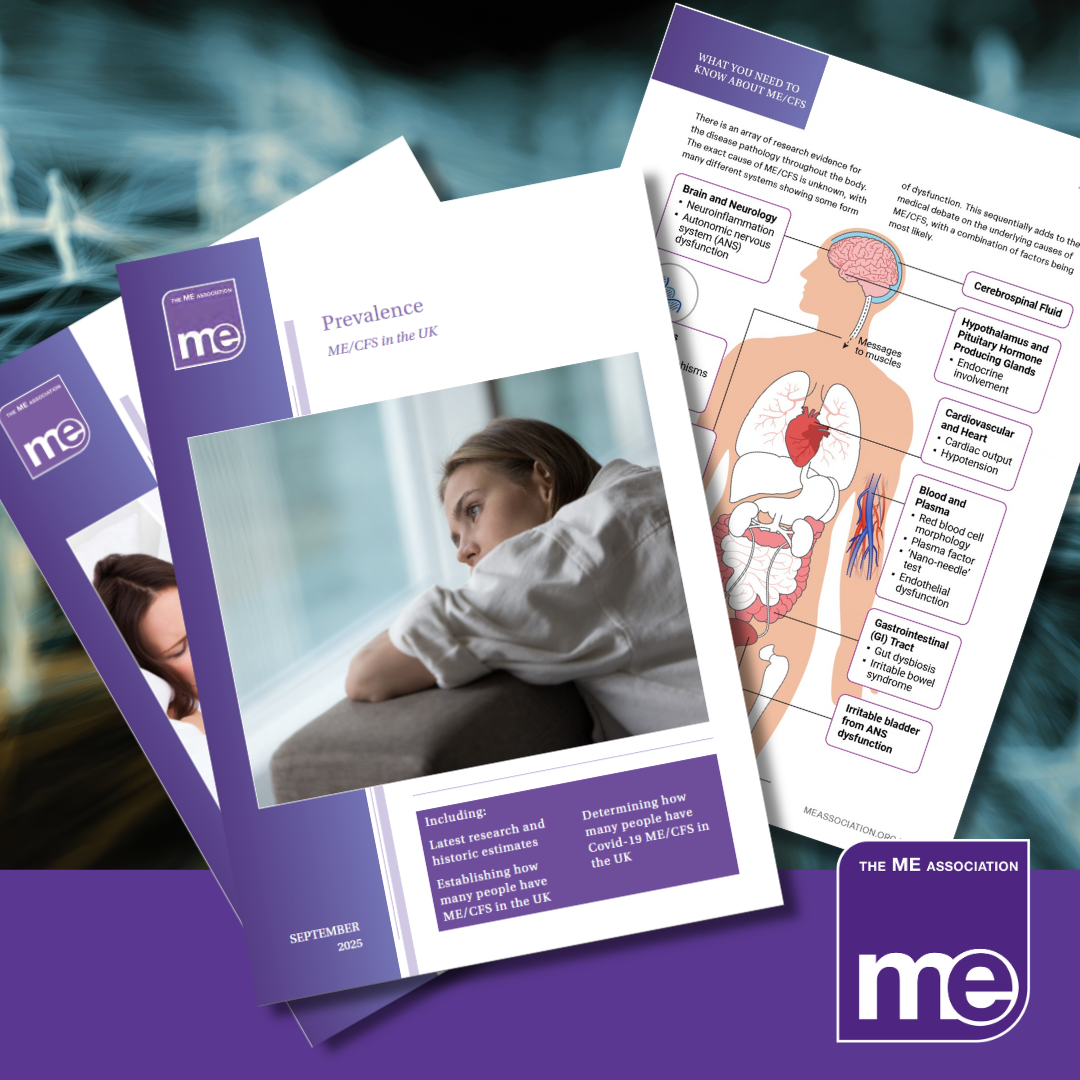
Diagnosing ME/CFS: Early and Accurate Diagnosis
This booklet is available as a free download. We explain why an early and accurate diagnosis is so important and review the recommendations in the 2021 NICE Clinical Guideline. We examine the core symptoms, the need to consider a patient’s clinical history, clinical investigations and blood tests, and consider other explanations for persistent symptoms.
Visit our full range of free literature
- NICE Guideline
- Symptoms
- Management
- Benefits
- Carers
- Diet and Nutrition
- Medication
- Fibromyalgia
- Blood tests explained …and more…
Written by Dr Charles Shepherd, other advisers, and topic experts
Contact the Healthcare 4 ME care team
Latest blogs, news and updates on Healthcare 4 ME

Training and CPD for healthcare professionals

NHS England E-learning
Modules on ME/CFS:
- An Introduction to ME/CFS
- ME/CFS: guidance for community based healthcare practitioners
- Supporting people with severe ME/CFS
- Support and clinical management of severe ME/CFS
Note: this session is restricted to full users only
If you have any comments about the modules please email feedback@meassociation.org.uk. Thank you.
The E-learning programme has been developed in collaboration with patient groups and the Department of Health and Social Care (DHSC) as a resource for all healthcare practitioners looking to enhance their knowledge and support for individuals living with ME/CFS.
Module development has been overseen by Dr David Strain (Consultant to the Exeter ME/CFS specialist service) and Essi Niitymaki (Technology Enhanced Learning(TEL) Education Content Senior Project Manager, NHS England). Also involved were clinicians with an interest in ME/CFS, representatives from the DHSC and other government departments, charity representatives (including from the ME Association), and people with lived experience.
The E-Learning Modules aim to:
- highlight the variability in patient experiences and the impact of ME/CFS on individuals and their families.
- underscore the importance of early and accurate diagnosis, specialist referral, pacing, symptom management, and use of supportive networks.
- encourage the adoption of NICE Guideline recommendations and a multidisciplinary approach to patient care.
Continuing Professional Development for Healthcare Professionals
Learna Study PRN: ME/CFS
FREE online CPD module composed of 10 clinical cases assessing your knowledge of ME/CFS. Receive a 1 Hour CPD Certificate on successful completion of this module.
The module will challenge your clinical knowledge and patient management as a Healthcare Professional. It has been written by clinical and patient experts, including Dr Nina Muirhead (Doctors with ME), Dr Charles Shepherd (The ME Association), and members of the CFS/ME Research Collaborative (CMRC).
- Post-exertional malaise as a principal feature of ME/CFS
- Main diagnostic features of ME/CFS
- Commonly comorbid conditions related to ME/CFS
- The importance of early and accurate diagnosis
- The dangers of prescribing exercise for ME/CFS
- Differential diagnoses that may emerge when considering and following a diagnosis of ME/CFS
- Relevant blood tests and investigations, excluding alternative diagnoses and establishing disease features relevant to ME/CFS
- Evaluating the needs of individuals in formulating treatment plans and proposing the need for the development of disease-specific pharmacological management
- The importance of providing patients with relevant documentation in connection with applications for state benefits, social and community care
- The heterogeneous nature of the condition, common patterns of onset, fluctuating levels of ability, variability in presentation, course of illness and outcomes, and range of severity
It is designed to update and assess your clinical knowledge and patient management of the evolving international biomedical narrative on ME/CFS. On successful completion, you will have an improved understanding of:
MIMS Learning: NICE guidance on ME/CFS
In this learning module, Dr Toni Hazell highlights relevant points for GPs and primary healthcare professionals from the 2021 NICE guideline on myalgic encephalomyelitis/chronic fatigue syndrome.
Educational objectives: After completing this module, healthcare professionals will be better able to:
- Recall what’s new and what’s relevant to them in the October 2021 NICE guidance on ME/CFS
- Know what to do differently in practice in the light of the NICE guidance
- Accurately assess symptoms and severity of ME/CFS
- Know what treatments are appropriate for ME/CFS
- Know when to refer for specialist input
- Be aware of areas of controversy in the management of ME/CFS
This module is not free. It requires a subscription, available from £14.99 a month.
Dialogues of a Neglected Illness
This is an excellent project supported by the Wellcome Public Engagement Fund. It includes commentary from leading clinical and research experts – including Dr Charles Shepherd from the ME Association – as well as people who live with ME/CFS.
To see more about Dialogues for ME/CFS, visit their site here. Below are 3 of their videos that show aspects of the illness. (Tap controls to play on full screen.)