

There are around 404,000 people in the UK with ME/CFS and around 950,000 people unable to recover from a Covid infection who could meet the diagnostic criteria for ME/CFS. There are also thousands more who remain undiagnosed.
We are committed to working with the NHS and healthcare providers to improve healthcare for people with ME/CFS and Long Covid.
We believe that everyone, regardless of where they live in the UK, should have equal access to the right care and support to manage their ME/CFS with the best healthcare available.
Contact the Healthcare 4 ME team

Latest blogs, news and updates on Healthcare 4 ME

Our work has three main goals:
1. Engagement with Healthcare Services
Our first goal is to ensure that individuals with ME/CFS/Long Covid can access reliable specialist care and management, regardless of their location.
2. Support for NICE Guidelines
Our second goal is to encourage and assist all NHS and support services in adopting the NICE Guidelines for ME/CFS. We will provide support and advice to help current services implement these guidelines effectively.
3. Addressing Individual Patient Concerns
Our third goal is to engage with individuals and healthcare professionals (HCPs) to address and resolve individual patient concerns. We are committed to ensuring that every voice is heard and that each issue is addressed, both within and outside the pilot regions.
Healthcare Information for Severe/Very Severe ME/CFS Patients
Care Needs Assessment
We want to acknowledge and support the crucial role that family members play in caring for people with ME/CFS and Long Covid. They are often the primary caregivers, helping their loved ones to maintain independence where possible, while trying to get the kind of healthcare that is most needed.
Under the Care Act 2014, everyone who requires help and support at home has the right to a social care needs assessment. A family member can initiate this process by contacting social services through the local authority. Remember, this is every person’s entitlement, regardless of the level of assistance they might need. You can also ask a GP or specialist to initiate the assessment process and they will liaise with social care services. A friend can also request an assessment from the local authority with the permission of the individual who needs help at home.
I need a Care Needs Assessment. How do I get one? – Apply for a needs assessment
NHS Continuing Healthcare Funding
People who have a disability or a complex illness are entitled to apply for and if successful receive a fully funded care package. NHS Continuing Healthcare funding is available to adults living in England who have particularly intense, complex, or unpredictable care needs. Importantly, unlike local authority funding, it is not means-tested.
The Continuing Healthcare (CHC) Checklist is the first step in determining whether you are eligible for NHS Continuing Healthcare. This initial assessment is conducted by a nurse, doctor, social worker, or other qualified healthcare professional who will briefly evaluate your care needs. If you qualify you should be referred for a full CHC Assessment.
A Continuing Healthcare Assessment will be carried out by your local Integrated Care Board (ICB).

“We want to ensure every healthcare provider has an up-to-date, evidence-based framework for treating ME/CFS and Long Covid”
We are now working hard to engage with existing services in the NHS to try and ensure that the care and management of people with ME/CFS and Long Covid is evidence-based and adheres to the NICE guideline recommendations.
Our goal is to ensure that individuals with ME/CFS and Long Covid have access to essential health and social care services regardless of where they live in the country.
We aim to bridge the gap and provide support where it is most needed.
We aim to increase the number of services dedicated to ME/CFS and Long Covid while ensuring that these conditions receive as equal consideration as other chronic illnesses in terms of healthcare funding.
By involving patients and carers in every step of the process — from initial planning to ongoing feedback — we hope to ensure that their lived experiences will help to shape healthcare services in the future.
The pilot project, which began in October 2024, resulted from six months of dedicated research. Once our funding was secured, we were able to bring on board Lucy and Charlotte, who joined Karren, all of whom are experienced NHS professionals. Their dedication and expertise have been instrumental in the project’s progress.
We selected the Buckinghamshire, Oxfordshire and West Berkshire (BOB) Integrated Care Boards areas because the existing services in some regions could help provide a foundation for our work. The BOB area is extensive, encompassing just under two million people.
Aim: To foster positive engagement with healthcare services and residents.
We initiated the pilot project with our three main goals:
- Engagement with Healthcare Services
- Support for NICE Guidelines
- Addressing Individual Patient Concerns
We planned to review the current state of ME/CFS/Long Covid services in each area, assess gaps and challenges in service provision, and provide recommendations for improvement. This process was designed to enhance our understanding of how NHS and social care services manage individuals with ME/CFS/Long Covid and to identify actionable steps to advocate for practical improvements.
We also intended to liaise with commissioners and the NHS to ensure better service provision for people with ME/CFS/Long Covid, including those with severe or very severe cases. Our goal is to support health and social care services so that everyone with ME/CFS/Long Covid has access to the specialist teams and referral services recommended by the new NICE guidelines.
Aim: To foster positive engagement with healthcare services and residents. The project has been incredibly productive in our efforts to support individuals with Myalgic Encephalomyelitis/Chronic Fatigue Syndrome (ME/CFS) and to strengthen the services available to them. We have engaged with key service leads and provided direct support to individuals.
The team has played a vital role in collaborating with healthcare organisations and residents across various regions of the UK, especially those taking part in the pilot program. This collaboration has strengthened our project’s credibility and ensured that the voices of all stakeholders are heard and considered.
A key focus has been meeting with service leads across Wales and England who oversee ME/CFS and Long Covid services. Additionally, direct engagement with individuals who have ME/CFS/Long Covid ensures their voices are included.
We have concentrated on raising awareness and advocating for the implementation of the NICE Guidelines, which may involve creating new or improving existing specialist services for ME/CFS and Long Covid clinics. National and local initiatives, driven by our shared goal of enhancing healthcare, will show healthcare commissioners that local communities desire quality healthcare.
We are committed to actively engaging with local representatives, including councillors and Members of Parliament (MPs), as well as existing local support groups, patients, and caregivers. This inclusive approach ensures that all perspectives are heard and considered.
We reached out to all social care teams in the pilot region; while all teams responded, they highlighted a significant issue: ME/CFS diagnoses are not formally recorded because social care assessments are based on needs rather than specific conditions. This means we cannot accurately record the number of individuals within the community who have ME/CFS/Long Covid and require home care.
In light of recent announcements about the closure of NHSE and a mandate for all Integrated Care Boards (ICBs) to reduce their operating costs by 50%, we have contacted the engaged ICBs to determine whether this has affected their service provision. Updates will be provided based on their responses.
We aim to build upon the insights and experiences gathered during the pilot program, applying these lessons to enhance our strategies and expand our outreach, ultimately affecting a larger population while increasing awareness of our mission.
To support our efforts, we will initiate or strengthen educational training programs for healthcare providers, ensuring they have the most relevant knowledge and skills.
Some of the services we have worked with so far include:
- ICBs
- NHS Trusts (including Mental Health and Community care)
- Commissioners
- Local authorities (responsible for Adult and Children’s social services)
- District councils
- All Healthwatch’s
- Primary Care networks
- NICE
- GP Practices
- ME/CFS and Long Covid clinics
- People with ME/CFS/LC and carers/family
- MPs
- Support groups
- Social Care HCPs
- Other Charities
We distributed a new leaflet to all Councillors and MPs. This leaflet was created in response to a request for a physical handout that they could provide to individuals inquiring about ME/CFS and Long COVID services or wishing to join our working group.
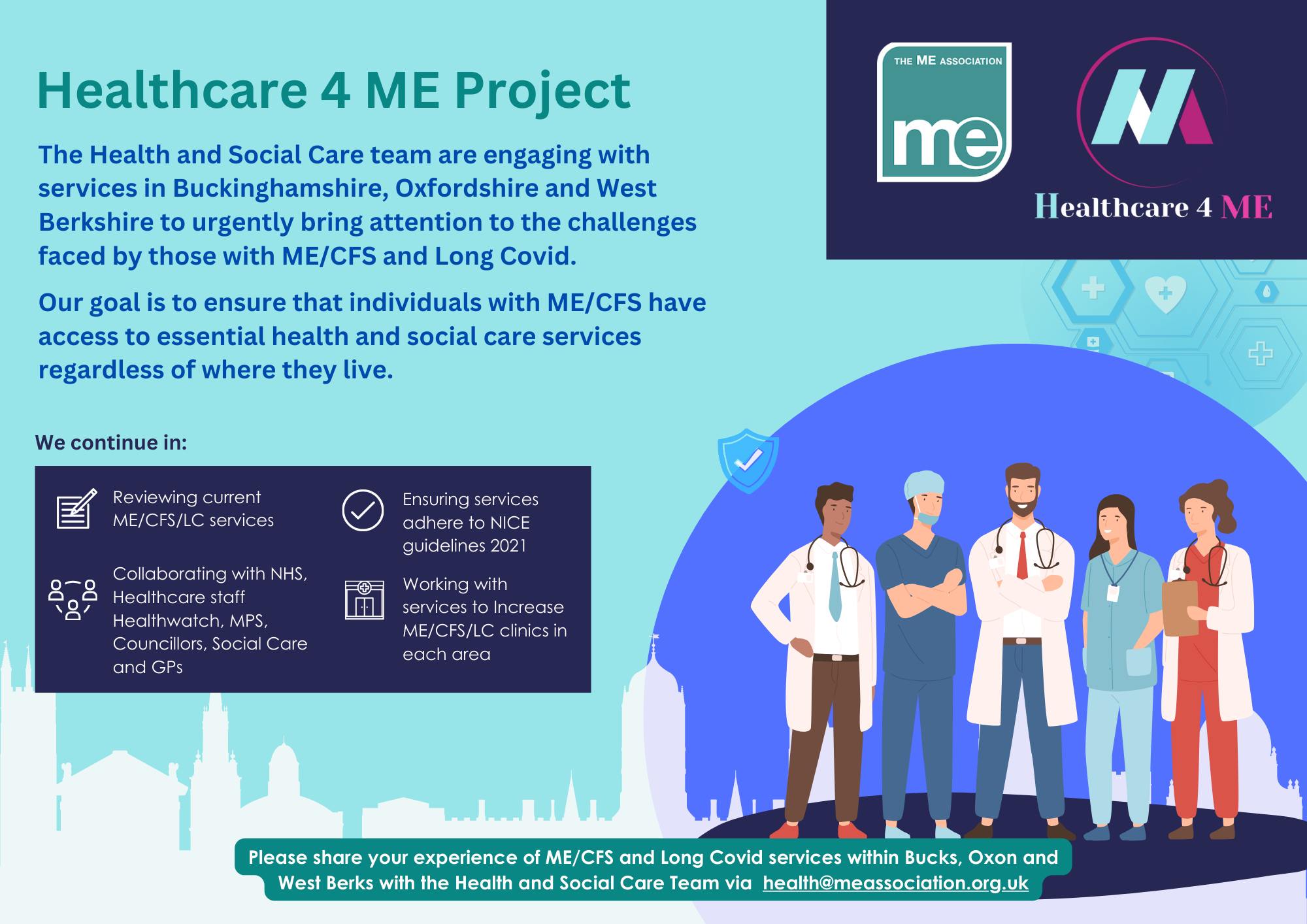
The HASC team have recruited a lived experience working group of ME/CFS/LC patients and carers living in BOB ICB (Buckinghamshire, Oxfordshire, and West Berkshire Integrated Care Boards).
The Working Group supports the pilot initiative across BOB ICB aimed at reviewing and improving NHS and social care services for people with ME/CFS and Long Covid. Its core purpose is to ensure that lived experience directly informs service development, particularly in relation to the updated NICE Guideline on ME/CFS.
The working group has helped us to:
- Shape the direction of the ME Association’s pilot initiative by providing real-world insights from local patients and carers.
- Identify gaps in current health and social care provision.
- Share anonymous feedback with service leads and commissioners.
- Influence the development of services that better reflect patient needs.
Working Group Meetings
Patient severity ranged between moderate to severe, and many members of the working group were housebound. Attendees described similar experiences of dismissal of their symptoms by healthcare professionals and a lack of NHS support, which resulted in some members disengaging with NHS services.
Through a series of working group meetings, key areas of concern and opportunity were identified. This included the need for more coordinated services and the importance of specialist roles within a multi-disciplinary care team. Discussions highlighted the vital role of specialist nurses, the need for domiciliary care, and barriers to accessing health services and financial support. The group put forward the recommendation of establishing a specialist hub which could provide ongoing follow-up care and annual reviews in line with the latest NICE guidance. There was a strong emphasis on making services more inclusive, particularly for the most severely affected patients.
About us: Meet the team

Ren
Head of Healthcare

Charlotte
Deputy Head of Healthcare

Lucy
Healthcare Support and Engagement Lead
We’re currently facing our greatest challenge: improving healthcare equality. We’re exploring different ways to maximise impact. Although services will take a top-down approach once the delivery plan has been published, we believe that starting at the local level would be most effective. Our top priority is to determine patient demand for specialist services. When collaborating with Buckinghamshire, Oxfordshire & West Berkshire (BOB) Integrated Care Board (ICB) and the healthcare commissioners, it will be essential to initiate discussions that will lead to increased provision of services in accordance with NICE guidelines.
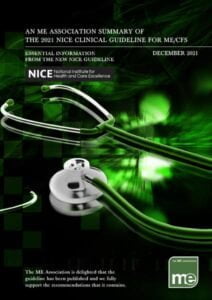
The ME Association has produced a summary of the 2021 NICE clinical guidelines for ME/CFS with key recommendations and extracts taken from the full NICE clinical guidelines.
Visit our full range of free literature
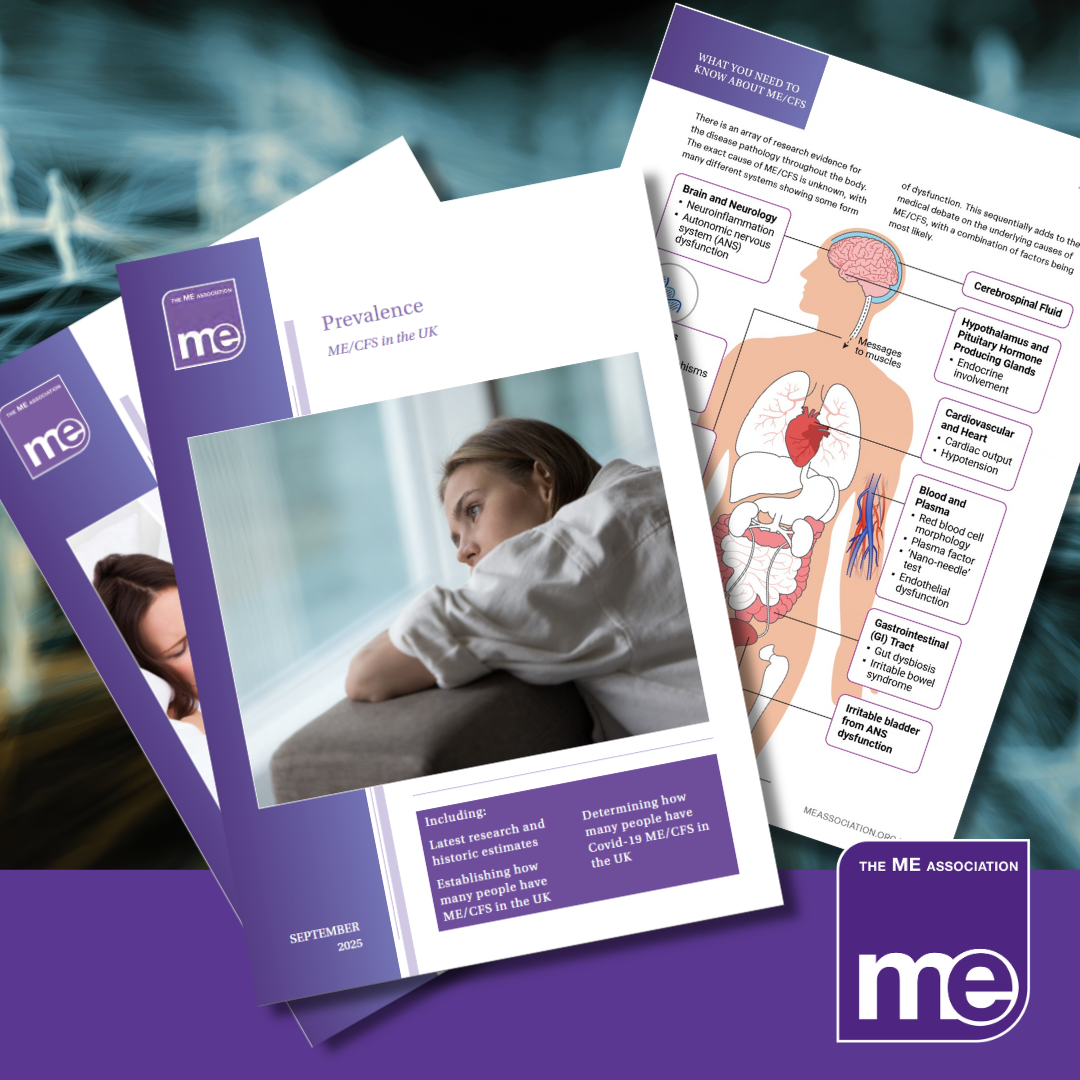
- NICE Guideline
- Symptoms
- Management
- Benefits
- Carers
- Diet and Nutrition
- Medication
- Fibromyalgia
- Blood tests explained …and more…
Written by Dr Charles Shepherd, other advisers, and topic experts