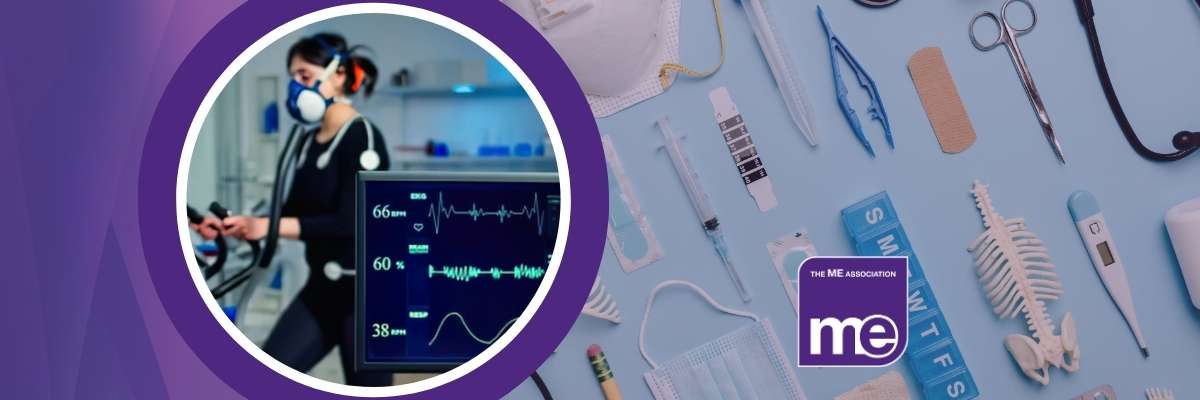
A new article, published in Nature on October 6th, assess the safety of cardiopulmonary exercise testing (CPET) in patients with Long Covid versus healthy controls. Read the summary and abstract below, alongside comment from Dr Charles Shepherd, MEA Hon Medical Adviser.
AI Summary
- What the study looked at: Researchers compared 18 people with severe post-COVID-19 condition (PCC) with 18 healthy people to see how their physical capacity differed and whether a strenuous exercise test triggered post-exertional malaise (PEM) symptoms.
- What they found: The PCC group had substantially lower exercise capacity than the healthy group. After the exercise test, their overall symptom severity increased significantly for 1–3 days, particularly fatigue and joint pain.
- How long symptoms lasted: On average, symptoms had returned to their pre-test levels after 4–7 days. The researchers did not find evidence of a prolonged worsening of symptoms following this single exercise test.
Extracts: Abstract
Patients severely affected by post-COVID-19 condition (PCC) and myalgic encephalomyelitis/chronic fatigue syndrome (ME/CFS) exhibit reduced physical capacity, hyperventilation, and a high susceptibility to post-exertional malaise (PEM).
Cardiopulmonary exercise testing (CPET) is considered the gold standard for objectively assessing physical capacity and for exploring underlying physiological limitations. However, evidence regarding the safety and PEM-associated symptoms following CPET remains limited.
This study aims to objectively assess physical capacity using CPET, and to systematically investigate changes in the duration and severity of ten PEM-associated symptoms before and after CPET.
A total of 18 PCC patients and 18 healthy controls (matched for sex, age, and body mass index) completed a single maximal, symptom-limited CPET on a cycle ergometer. Ten PEM-specific symptoms were assessed daily for 7 days before and 14 days after CPET (scale 0–10).
For clinical characterization, the Canadian Consensus Criteria (CCC) were applied, and the Bell Disability Scale and DePaul Symptom Questionnaire Short-Form-PEM (DSQ-PEM) were completed once before the CPET. Among PCC patients, 61% fulfilled ME/CFS criteria, 67% screened positive for DSQ-PEM, and the mean Bell-Score was 37.8 ± 19.3.
Physical capacity was markedly reduced compared with healthy controls (Peak power output: 1.1 vs. 2.4 W/kg, p < 0.001; VO2peak: 16.0 vs. 26.5 mL/min/kg, p < 0.001). In the PCC group, a significant increase in mean symptom severity was observed across all measured symptoms from baseline to the acute period (1–3 days after the CPET; Δ = 0.56, p = 0.002), but after 4–7 days, levels returned to baseline.
Two out of ten symptoms increased significantly after the CPET: general fatigue (Δ = 0.99, p = 0.018) and joint pain (Δ = 0.69, p = 0.036). However, after 4–7 days, no significant differences remained. No significant group-by-timepoint interaction was found when stratifying PCC patients by DSQ-PEM status (p = 0.187), Bell-Scores (≤ 30 vs. >30, p = 0.276), or ME/CFS status (p = 0.523).
Severely affected PCC patients showed markedly reduced physical capacity compared with healthy controls. A single maximal symptom-limited CPET induced only a transient, clinically non-relevant symptom increase (1–3 days) without prolonged exacerbation. Furthermore, the results of the CPET can be used to provide individualized objective cut-off values aimed at minimizing PEM during exercise therapy and/or activities of daily living.
MEA Comment
The cardiorespiratory exercise test (CPET) can provide useful research information about how the heart and respiratory system respond in ME/CFS to a short burst of physical exercise on an exercise bike.
As these researchers point out, the CPET can also produce an exacerbation or relapse of ME/CFS symptoms. Patient feedback indicates that this can sometimes be prolonged and severe.
So a CPET can only be regarded as a research tool in relation to ME/CFS in our current state of knowledge. And as it can cause a relapse of ME/CFS, it should not normally be used for diagnosis or management purposes.
Dr Charles Shepherd,
Trustee and Hon. Medical Adviser to the ME Association,
Member of the 2018-2021 NICE guideline on ME/CFS committee,
Member of the 2002 Chief Medical Officer's Working Group on ME/CFS

More Information:
- Medical Matters: Where can I get a two-day CPET test?
- ME Association: IACFS/ME Conference – Professor Todd Davenport study on exercise testing and ventilatory measurements | October 11, 2021