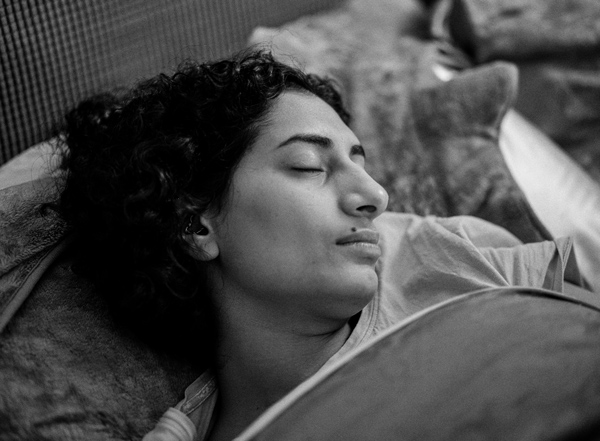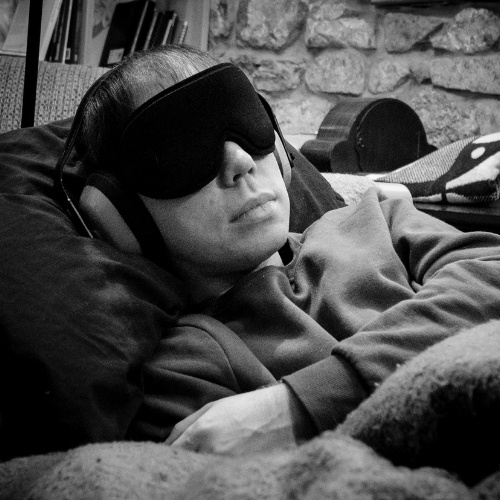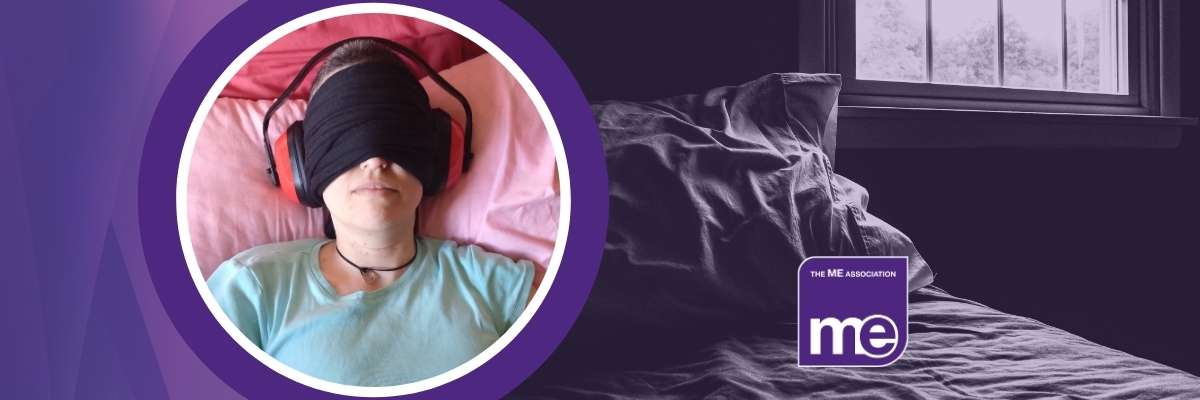
“The reality is that there is currently no clear treatment pathway for people with severe ME, no specialist care services, and no trained carers who understand my condition. If my health continues to deteriorate, there is no safety net waiting. This has to change”
During Severe ME Week 2026 (3rd – 9th August) we are sharing stories and artworks from people with Severe ME to help raise awareness of this debilitating condition. Thank you to Rebecca, who has Severe ME, for kindly sharing her story with us.
“I was 11 years old when I first became ill. In December 1995, I caught a bad flu infection and never seemed to recover. I was constantly exhausted, nauseous and in pain, and as time went on, more symptoms appeared. Doctors repeatedly ran tests that came back normal and told me it was post-viral fatigue that would improve within a few weeks.
Those weeks turned into months, and went on for a decade, with occasional improvements followed by deteriorations after more viral infections.
Before becoming ill, I was a happy, active child. I loved being outdoors and spent the summer camping, doing adventure activities and embracing every minute of it. I enjoyed family trips, and playing outside.
In 2004, I went to university. Like many students, I was excited by the independence, making new friends and building a life for myself. It was there that I met my now husband.
Unfortunately, during my first year, I caught “freshers’ flu”, which lasted for six weeks. From that point, my health declined rapidly. I experienced more frequent and severe crashes, and after contracting tonsillitis towards the end of the academic year, everything changed.
I deteriorated to the point where I became a wheelchair user.
When I returned to my GP, more tests were carried out. Once again, nothing showed up. I was told I should be “grateful” the tests were normal and reassured that I would recover in a few weeks.
I began researching my symptoms myself and came across information about Myalgic Encephalomyelitis (ME). I printed out a list of symptoms and took it to a different GP. I explained that I had every symptom on the list and that I had been dealing with them for years. Thankfully, he listened and agreed to diagnose me.
I was referred to a specialist clinic, where I learned about pacing, which helped me manage my limited energy. I was also advised to undertake graded exercise therapy*, which made my condition worse. Before long, I had to leave university and, sadly, I have never been well enough to return to education or employment. Since then, my health has continued to decline.
For around 15 years, I was largely housebound. Then, in 2024, after a probable Covid infection, I became completely bedbound. Today, my world is entirely confined to my bedroom.
I can only get out of bed to use a bedside commode. I cannot sit upright for more than a couple of minutes without risk of fainting. My day is spent lying down, often wearing a blindfold because light is painful. I live with severe symptoms every minute of every day.
I experience significant muscle, joint and nerve pain, profound weakness and occasional periods of paralysis. Even minor overexertion can cause violent full-body tremors and muscle spasms that last for hours. I also live with POTS, chronic migraine, allergies and food intolerances. My body can no longer regulate its temperature properly, which makes warmer weather particularly difficult.
I struggle to hold conversations for more than a few minutes. My short-term memory has been badly affected and I have severe sound sensitivity. Everyday noises most people wouldn't even notice, such as someone walking across the room or pouring a glass of water, can be intensely painful.
My husband is my main carer. He works from home and has built his routine around my care needs as well as his job. My parents live nearby and help whenever they can.
I can still feed myself while lying down, although my diet is restricted and sometimes food needs to be blended so I can drink it from a beaker. I haven't been able to shower for nearly two years and instead have bed baths, usually no more than once a week because they require so much energy.
I listen to audiobooks most days, although I have to slow them down to 0.8 speed to follow them. Occasionally I can watch short pieces of television on my phone with audio description enabled. I can no longer read much text, so I rely on screen readers and dictate messages instead of typing. It's how I stay in touch with friends and family.
Most people have no idea that ME can be this severe. Whenever I describe my condition, people are shocked. They struggle to comprehend that someone can be so profoundly disabled and yet receive so little informed medical support.
The reality is that there is currently no clear treatment pathway for people with severe ME, no specialist care services, and no trained carers who understand my condition. If my health continues to deteriorate, there is no safety net waiting. There isn't a single hospital in this country with the facilities or training to accommodate even my most basic care needs, let alone provide any treatment. That has to change.
We urgently need more research, greater awareness and better professional training so that people with severe ME receive appropriate care and support.
By speaking out during Severe ME Week, I hope to help others understand the reality of this condition and encourage people to stand alongside us in calling for change, and help us advocate for research funding and informed training.”
N.B. *The recommendation surrounding Graded Exercise Therapy (GET) in this story is based on past experiences from 2004. The 2021 NICE Guideline does not recommend GET for the management of people with ME/CFS (please see Box & section 1.11.9 Incorporating physical activity and exercise)
Media Coverage:
The Star: Sheffield woman calls for urgent change in care and support for people with severe ME | August 8, 2026

Severe ME Awareness Week 2026:
3rd-9th August