
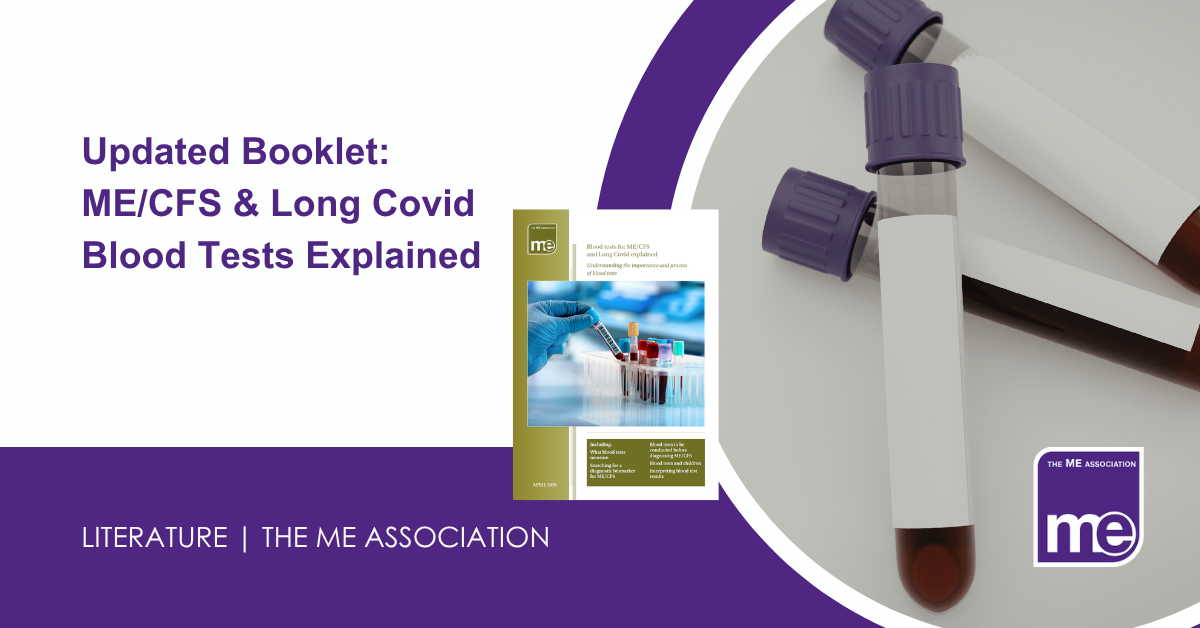
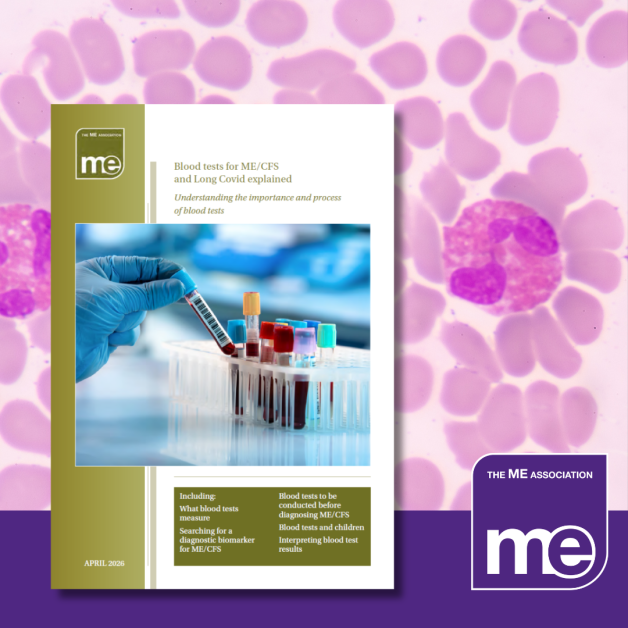
A comprehensive booklet entitled ‘Blood tests for ME/CFS and Long Covid Explained‘ has been recently been updated by Dr Charles Shepherd, Honorary Medical Adviser to the ME Association.
Key Points
- Diagnostic blood tests for ME/CFS and Long Covid do not currently exist.
- Research is underway to try and find blood-based biomarkers that could be used as diagnostic tests for both conditions.
- Before a diagnosis of ME/CFS or Long Covid is made, some baseline blood tests should always be checked. These tests help to exclude other conditions that can cause similar symptoms to ME/CFS and Long Covid.
- If the results of any of these baseline tests are abnormally high or low, further assessment and investigations may be necessary.
- Conditions like hypothyroidism become more common in older age and can cause fatigue and other ME/CFS like symptoms. It may therefore be sensible to carry on checking these tests – especially where there is any deterioration in symptoms.
Introduction
What does a blood test measure?
Human blood is composed of several key components: red blood cells, white blood cells, platelets, and plasma.
Red Blood Cells (RBCs) RBCs are responsible for transporting oxygen throughout the body. A deficiency or abnormality can lead to anaemia, which causes fatigue and weakness.
White Blood Cells (WBCs) WBCs are a crucial part of the body’s immune-system response to infections and allergies. They are divided into
- Basophils: Involved in allergic responses.
- Eosinophils: Help to combat parasitic infections, contribute to allergy responses and help with tissue repair.
- Lymphocytes: Key players in immune responses, with T-cells and B-cells having specific roles in dealing with infections.
- Neutrophils: First responders to bacterial and fungal infections.
An increase in a specific type of WBC can indicate an ongoing allergic or infectious reaction whereas a significant decrease in the number of
white blood cells indicates some form of immunodeficiency.
Platelets: Platelets are small cellular fragments that help to form clots and stop bleeding. A low platelet count can lead to excessive or prolonged
bleeding from injuries. Higher than normal levels may indicate inflammation or other health concerns.
Plasma: Plasma is the fluid portion of blood which carries red and white blood cells and platelets around the body. It also contains:
- Antibodies: Also known as immunoglobulins – produced by the immune system to fight infections.
- Electrolytes: Include important substances such as sodium and potassium.
- Hormones: Chemical messengers that regulate numerous body functions.
- Nutrients: Including vitamins, minerals, sugars, and fats that are necessary for cellular function.
Recent advances in science allow researchers to explore specific proteins (proteomics), metabolites (metabolomics), and genetic factors (genomics) in the blood. These tests are particularly useful in understanding the cause of complex conditions like ME/CFS and identifying biomarkers that can aid in diagnosis.
Medical Disclaimer
This leaflet is not intended to be a substitute for personalised medical advice or treatment. You should consult your doctor whenever a new symptom arises, or an existing symptom worsens. It is important to obtain medical advice that considers other causes and possible treatments. Do not assume that new or worsened symptoms are solely because of ME/CFS or Long Covid.