Study Aim and Approach
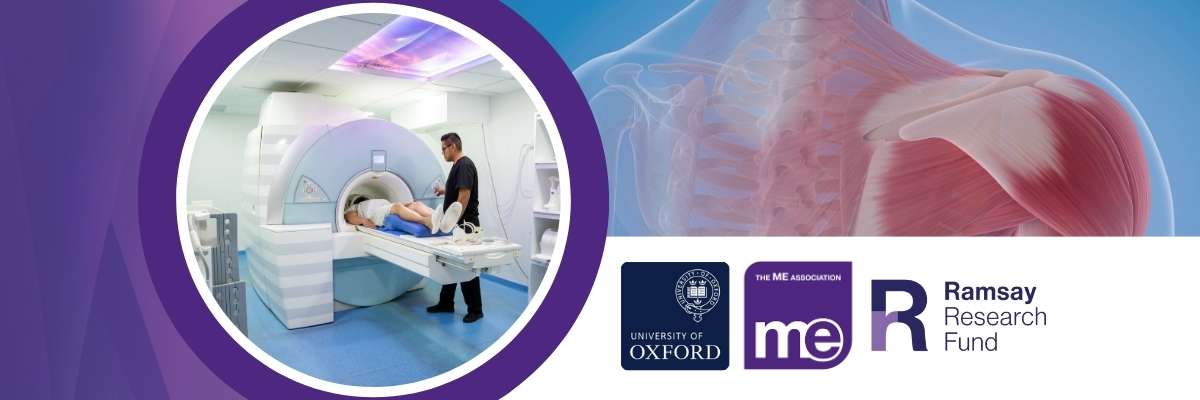
This study will investigate mitochondrial health in people with ME/CFS using two state-of-the-art in vivo measurement techniques: magnetic resonance imaging (MRI) and near-infrared spectroscopy (NIRS).
The project is structured in two stages to compare muscle metabolism between groups and to assess whether mitochondrial changes are more apparent during post-exertional malaise (PEM):
Stage 1: Compare muscle metabolism in people with ME/CFS and matched healthy controls.
Stage 2: Assess mitochondrial function at two time points: baseline and during a mild episode of PEM, when dysfunction may be more pronounced.
Why This Matters
ME/CFS is a complex condition, and fatigue levels can change substantially during PEM. Measuring participants at both baseline and during mild PEM should therefore help identify the biological changes associated with symptom worsening.
The study will also cross-validate MRI and NIRS as non-invasive ways to measure muscle energy production and oxygen use. If NIRS proves reliable, its portability, accessibility, and lower cost could make it useful for larger-scale studies of people with ME/CFS, including those unable to undergo MRI scanning. In time, it may also have potential as a screening tool in general practice.
Progress to Date
Progress is being tracked across three main areas: participant recruitment, completion of study visits, and data analysis:
- The study was announced on 29 June 2026, formally opening recruitment.
- More than 100 people have contacted the team to express interest.
- Over 60 potential participants from across the UK have been screened.
- Thirteen eligible patients have been consented and booked for September study visits, reaching more than 50% of the patient recruitment target.
- First two ME/CFS patients have already successfully completed the baseline study visit.
- Some interested individuals were not eligible or lived too far away to take part, which is a common challenge in studies of this type.
Recruitment of healthy controls has also begun. The aim is to generate an early cross-sectional comparison before recruiting the remainder of the patient cohort.
All equipment from Oxford Brookes University, including the NIRS machine and cycle ergometer, has now been moved to the Oxford Centre for Clinical Magnetic Research (OCMR). A trial run of the study visit for healthy controls has been completed successfully.
“We are very grateful to all who expressed their interest and are really sorry that we can't include everyone in this study.”
Professor Ladislav Valkovič
Next Steps and Potential Outputs
The next quarter will focus on completing the first study visits and maintaining recruitment momentum, so the project remains on schedule.
If healthy volunteer scans can be completed in early October, the team may consider submitting a preliminary results abstract to the International Society for Magnetic Resonance in Medicine (ISMRM). If this is not feasible, abstract and paper preparation will begin once the full dataset has been collected.
Recruitment is running alongside the Oxford Brookes team’s study of whole-body cryotherapy in people with fatigue, including ME/CFS and Long Covid. This creates an opportunity for collaboration and potential co-authorship across the two teams.
More information
Research: Does poor oxygenation and a delay in muscle energy recovery contribute to fatigue and PEM in ME/CFS? Now Recruiting! |June 29, 2026