“I want to share my lived experience of severe ME as I want people to understand just how life-changing, debilitating and disabling it is. This is an illness that has turned my life upside down and brings me to tears, but I have also built a new life for myself and I’m happy with what I’ve built.”
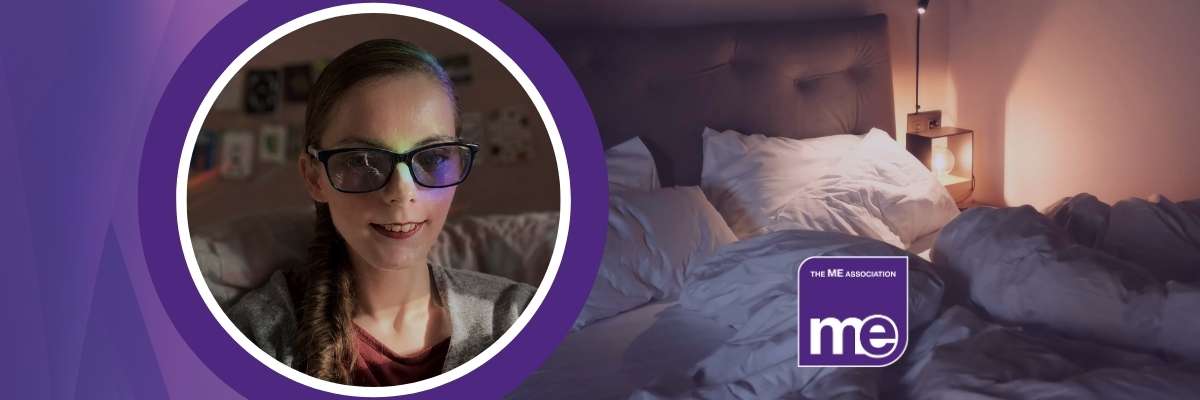
During Severe ME Week 2026, we're sharing stories from members of our community with severe ME to help raise awareness of this debilitating condition. Naomi, who has had ME since 2014, has kindly taken the time to share her experience for Severe ME Awareness Week 2026.
“In 2014, I caught flu which I never recovered from. I constantly had flu-like symptoms, overwhelming exhaustion, and cognitive difficulties. I could no longer read books because I couldn't concentrate, and even having a shower left me exhausted. I kept returning to my GP looking for answers. On several occasions, I was told I had Post Viral Fatigue Syndrome and that with enough rest I would recover. I rested, but instead of improving, my health deteriorated.
Trying to move forward without a diagnosis was incredibly challenging, and it was easy to think the problem was me. At the same time, I was grieving the life I had lost. Before becoming ill, I was studying for an undergraduate master's degree in nursing. I had dreams of becoming a Play Therapist and hoped to be the first person in my family to earn a master's degree. As my health worsened, I had to leave university. My friends moved forward with their lives, and I felt as though my life had just stopped.
In 2017 I was diagnosed with ME, and as my condition continued to worsen, it was classed as severe ME. I was pretty much left to go home and adjust to having ME myself, yet finally receiving a diagnosis brought enormous relief. I could stop blaming myself for how I felt.
Today, my life has changed a lot in both good and not so great ways. I live independently in my own adapted home, something that would be impossible without the support of my personal assistants (PAs) and my dad. Their support enables me to remain safe and maintain as much independence as possible.
Most of my day is spent in bed. Severe ME means that even the smallest tasks require careful planning and pacing. Simply getting washed and dressed with support from a PA can trigger Post-Exertional Malaise (PEM), which occurs hours or even days after physical, cognitive or emotional exertion. As an example, a bath can leave me significantly worse later in the day or the following day.
I heavily rely on support from my PAs who help me with everything from getting washed and dressed, making meals and drinks, medication, taking me to appointments, meeting my needs on a bad day, running errands for me, collecting groceries and so much more. My Dad supports me a lot too. He will come over in an emergency or make my tea when the carers are unable to. He also gardens for me.
One of the hardest aspects of severe ME is its unpredictability. I wake up exhausted every morning, but I never know when my energy will suddenly crash. I spend most of my day in bed. My symptoms can change from hour to hour. Pain levels fluctuate constantly, and I never know when PEM will hit, how severe it will be or how long it will last.
Severe ME is far more complex than fatigue. The best way I can describe it is to imagine the worst hangover you've ever had, combined with a severe case of flu and the feeling of not having slept for a week. Rest doesn't relieve it.
I also experience severe brain fog. Thinking can feel like trying to process information through treacle. Sometimes I know exactly what I want to say, but the words won't come out properly. Even typing a text message can result in a jumble of letters that don't match what is in my head. My memory, particularly short-term memory, is also significantly affected.
Pain is another symptom. I experience muscle pain, nerve pain, spasms, weakness and deep aching throughout my body. Light, noise and strong smells can cause physical pain and sensory overload. My body sometimes becomes completely overwhelmed by pain and stimulation and essentially shuts down. During these episodes I can become unable to move or speak, trapped inside my own body and only able to communicate by blinking or squeezing someone's hand.
My ME has also led to other health conditions, including Orthostatic Intolerance and Postural Orthostatic Tachycardia Syndrome (POTS), which make standing difficult. I use a wheelchair full-time and rely on various adaptations, including a profiling bed, specialist mattress, bath lift and voice-controlled technology that allows me to manage my environment with minimal energy expenditure.
Despite the challenges, I have worked hard to build a life that brings me joy. When my energy levels allow, one of my greatest pleasures is using my motorised wheelchair to get outside. Being out in the fresh air gives me freedom and supports my mental wellbeing, although sometimes it often worsens my PEM.
Pen paling has also become a vital connection to the outside world. On difficult days, even writing a postcard can be challenging, and may take weeks or months, but maintaining those relationships is important to me.
While I continue to grieve the life I lost, for instance I also miss being able to dance and the freedom ballet used to give me, I have also created a new one. Through my blog, I share my lived experience of severe ME and raise awareness of a condition that remains widely misunderstood.
I share my story because I want people to understand that severe ME is not simply being tired. It is a life-changing, disabling illness that affects every aspect of daily life. I would like to see better access to specialist ME services, improved hospital care and greater understanding among healthcare professionals. Too many people with severe ME are left to navigate this illness alone.”
Media Coverage:
- Lincolnshire World: Severe ME Week: Lincolnshire woman calls for greater awareness of severe ME | July 28, 2026

Severe ME Awareness Week 2026:
3rd-9th August