
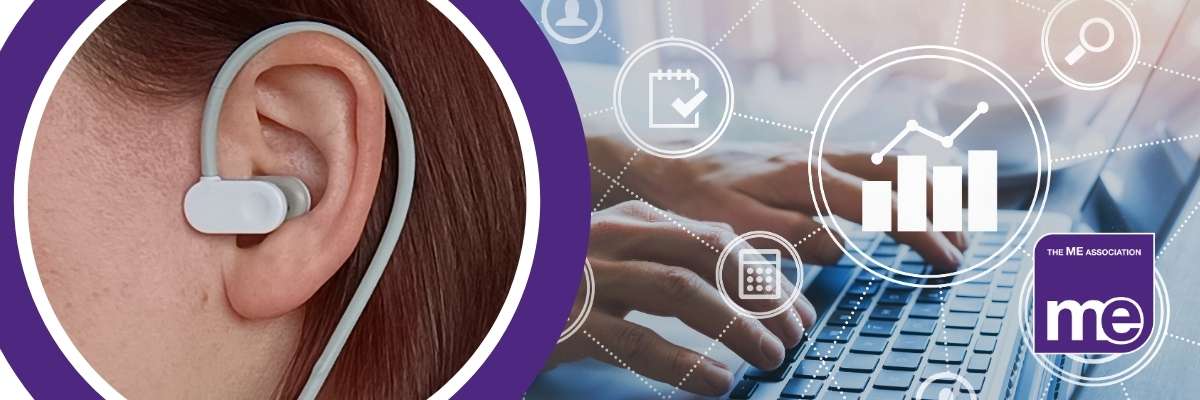
MDPI published a research review (May 2026) entitled ‘Transcutaneous Auricular Vagus Nerve Stimulation for Post-COVID-19 Condition: A Systematic Review and Critical Appraisal of Clinical Evidence‘ (Balan et al) which reviews five studies (n = 154 participants) (three randomized controlled trials (RCTs) and two single-arm studies) that met the inclusion criteria.
Abstract
Background
Long COVID, or post-COVID-19 condition (PCC), affects around 36% of individuals following SARS-CoV-2 infection, manifesting as persistent fatigue, cognitive dysfunction, and dysautonomia among its hallmark features. Affecting an estimated 400 million individuals globally, it imposes an annual economic burden exceeding $1 trillion, yet no pharmacological therapy has demonstrated consistent efficacy in adequately powered randomized controlled trials. Transcutaneous auricular vagus nerve stimulation (taVNS) has emerged as a candidate intervention targeting the autonomic dysfunction and neuroinflammation responsible for PCC pathophysiology.
Methods
We conducted a PRISMA 2020-compliant systematic review (PROSPERO: CRD420261287286) searching PubMed, Scopus, Cochrane, and Web of Science databases from inception to January 2026 for studies evaluating any form of VNS in adults with Long COVID. Risk of bias was assessed using the Cochrane Risk of Bias 2 (RoB 2) tool, the JADAD scale, and the PEDro scale. Certainty of evidence was evaluated using the GRADE framework. Narrative synthesis followed SWiM guidelines.
Results
Five studies (n = 154 participants) (three randomized controlled trials (RCTs) and two single-arm studies) met inclusion criteria. Three of five studies (60%) were rated high overall risk of bias; only two RCTs achieved “some concerns.” The only adequately double-blinded RCT found no significant between-group differences across all outcomes. Paradoxically, in the best-powered RCT (Percin et al.), sham stimulation produced significantly greater fatigue improvement than active taVNS, despite active taVNS producing significant HRV increases consistent with cardiac autonomic modulation. All efficacy outcomes were rated “very low” certainty (GRADE); safety was rated “low” certainty.
Conclusions
Currently available evidence supporting the use of taVNS for Long COVID remains limited, and the absence of reliable target engagement markers in the included studies constrains confidence in this approach. Nonetheless, the physiological rationale remains sound, and the favorable safety profile across all included studies supports the feasibility of future investigation. However, given that positive findings were confined to inadequately controlled studies, enthusiasm for further research should be directed first toward mechanistic clarification and rigorous dose-finding work. Large-scale, double-blind, sham-controlled trials incorporating validated markers of vagal engagement are required before taVNS can be firmly recommended for COVID-19 sequelae management.
Further Information
- Research: Effect of Vagus Nerve Stimulation on fatigue in people with Long Covid | May 26, 2026
- Feasibility Trial of Transcutaneous Auricular Vagus Nerve Stimulation for People with Myalgic Encephalomyelitis
- The ME Association: Vagus nerve stimulation trial: update | March 10, 2026
- The ME Association: Treating post-Covid (Long Covid) ME/CFS with transcutaneous vagus nerve stimulation (fVNS) | November 12, 2022