
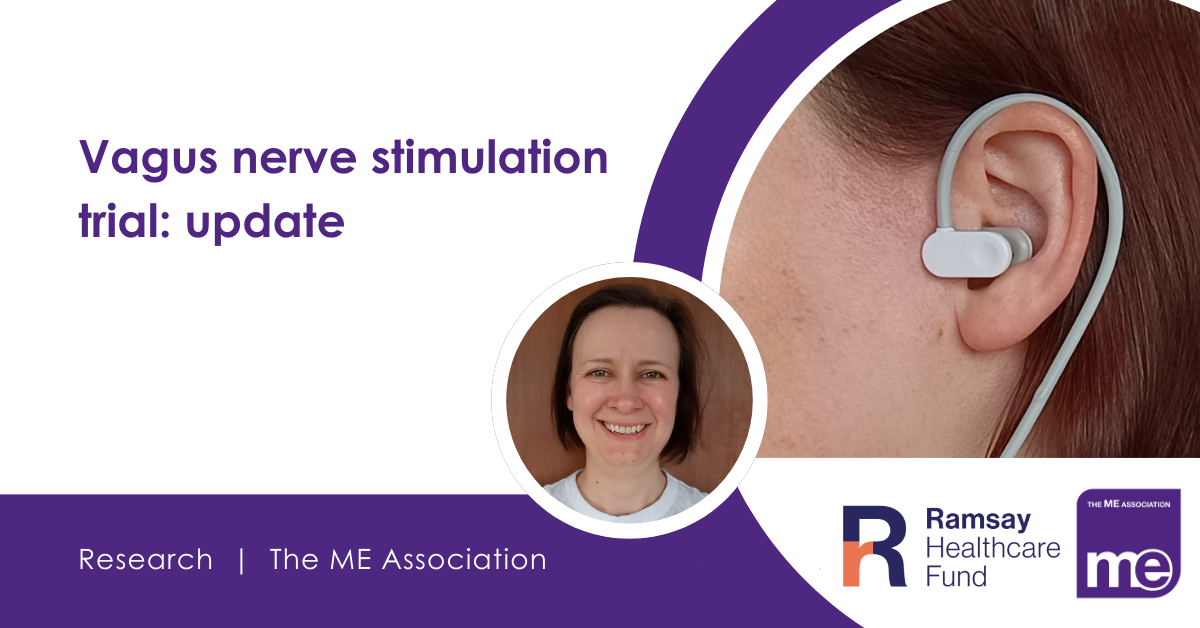
A feasibility trial looking at “transcutaneous auricular vagus nerve stimulation” (taVNS) in people with ME/CFS has now completed data collection.
The trial began recruitment in September 2024 and thanks to a rapid response from the ME/CFS community, the team easily recruited the required 40 participants, who were randomised into receiving either the vagus nerve stimulation or a sham (placebo or non-therapeutic stimulation).
A range of tests to measure physiological processes such as heart rate variability and metabolic activity were carried out at the participant’s homes. Participants used the devices for 12 weeks before having the same tests repeated, and they were interviewed about their experiences. They were then allowed to keep the devices and were interviewed 6 months later to see if they were still using them.
The vagus nerve is part of the autonomic nervous system and stretches throughout the body, from brainstem to colon. Electrical stimulation of this nerve at the ear can be used to manage epilepsy, depression, migraine, pain and anxiety, as well as a range of other benefits currently being studied.
A survey published in 2023 captured the experiences of 116 people with ME/CFS who have tried this intervention: 56% reported favourable effects, but 6% reported it made their ME/CFS symptoms worse. The purpose of this feasibility trial was to determine the best way to measure the effects of vagus nerve stimulation, and assess whether it was safe for further trials in people with ME/CFS.
Now that all data collection is complete, the team will begin the process of analysing all the results and hope to start sharing more information soon.
The trial was run by the University of Liverpool and led by Dr Nicola Clague-Baker, with Karen Leslie as research assistant (both members of Physios for ME). The study was initiated by Dawn Wiley, founder of the Facebook Group “A Vagus Adventure AVA” and Andrea Parker, an Occupational Therapist in South Australia. Dawn and Andrea use transcutaneous vagus nerve stimulation as part of the management of their own ME/CFS, and their input was instrumental in making the study as accessible and safe as possible. The trial team also included methodological support from Professor Helen Dawes, a specialist in exercise science and neuroscience, Professor Sarah Tyson, a mixed-methods specialist, and Associate Professor Natasha Brusco, a health economist.
The trial was funded by the Chartered Society of Physiotherapy Charitable Trust Physiotherapy Research Foundation Award. Karen Leslie is studying her PhD as part of this project and has been supported with her university fees by the ME Association.
More Information
- Physios for ME: Now recruiting – vagus nerve stimulation study | September 3, 2024