
Guest blog by Greg Crowhurst.
This is new blog looking at pertinent issues regarding Very Severe ME and builds on Greg's own experiences caring for his wife, Linda. It follows his recent contribution to Severe ME week.
I have cared day and night for my wife who has lain in unspeakable torment, torture and agony, for twenty-six years. The personal cost to us both because of M.E. has been enormous.

Communication is broken on every level. As soon as she has spoken, she forgets what she has said.
If I speak or ask a question it can cause unimaginable confusion and head-pain, shaking spasms, and deterioration.
Thoughts and memories are mostly beyond access. I must represent her and speak for her whenever the need arises.
Literally everything hurts her and risks deterioration to partial or total paralysis. One wrong movement or noise and the whole day is ruined before it has begun. People simply do not understand.
Who can possibly imagine living in such an assaulting and broken world for decades, without adequate investigation, care or support?
- We
receive no support from the Church or local community - We have
had been forced to live below the poverty line - Society
has lost out on our professional skills (I am an award-winning Nurse, my wife
is a qualified Social Worker, Counsellor and Teacher) - We live
in almost complete isolation, as my wife’s agony and hypersensitivities are so
intense, that she cannot bear contact or interaction - We have
not been able to have children of our own - I was
in my 30’s when my wife became ill, shortly after we got married, I am now in
my 60’s - We were
both highly respected professionals, but I have openly been called a “waste of
space” as a carer - My wife’s
profound suffering goes unrecognised and ignored as if she does not exist - Nieces
and nephews have grown into adulthood, married, had children who we do not know
and who do not know us - Parents
have got old and people have gotten sick without being able to visit them even
when dying or to attend their funerals
We live in a hamlet, four miles from what is regularly voted the best beach in England. My wife has never even seen it, let alone put her feet in the endless sand, felt the sea splash over her toes, heard the pines whisper above the dunes.

Every aspect of care, including how and when I move, how and when I act, how and when I speak, not just in the room – for it still has impact in any part of the house – needs to be carefully thought through and brought into my awareness.
We can never do the things other people take for granted, like:
- go on
holiday - out for
a meal - a
coffee at a cafe - a show
- a
concert - a film
- to see
a band - for a
walk together with the dog - cycle
- shop
- sail
- swim
- play
games, like badminton, tennis, or volleyball - walk
hand in hand - entertain
friends - have
dinner parties - go to
church, although our faith is immensely important to us
I have had to learn to take a Moment by Moment approach, to ensure the need is met in the right moment in the right way.
This is much harder than it sounds and needs the right attitude, a person-centred, partnership approach, understanding and focus.
My wife cannot:
- read a
book, play guitar, study or, learn - listen
to the radio - follow
conversation or engage in normal two-way conversation - have
anyone in the house due to perfume, noise and movement sensitivity - tolerate
virtually any contact at all - have
anyone making noise in the room with her - bear
even the simplest thing like having a cuddle or holding hands - find
rest ever, for rest increases her physical suffering
Our days are spent, without exception, struggling to cope from moment to moment in the most awful suffering anyone could imagine; except you couldn’t possibly imagine just how bad it is.
People I have known, dying of cancer, have still enjoyed a better quality of life than my wife. I simply cannot bear the thought of anyone else with M.E.:
- having
to endure the agony, the mistreatment, the abuse of power, the
misrepresentation, the incompetence, the ignorance, the denial, the lack of
accountability, the not being able to access safe, aware, medical advice or
tests that would help show up the physiological dysfunction, the physical harm,
the ongoing suffering that has no end in sight, down all these many years. - having
to cope, as we have, somehow, from the devastating consequences of wrong
treatment that caused an irreversible deterioration. - having
to fight, as we have, every step of the way against the Establishment’s
entrenched psychosocial mind set.
It is surely time for a quantum-leap change in attitude towards identifying, investigating, testing, diagnosing and supporting people with M.E.
It is surely time to stop using the label M.E. to mean anything other than the specific disease Myalgic Encephalomyelitis, classified by the WHO as a neurological disease and with multi-system dysfunction.
It is time to stop the misuse of the name Myalgic Encephalomyelitis to mean an umbrella term, incorporating a wide range of unidentified conditions and illnesses including mental health conditions and/or those either referred to as idiopathic chronic fatigue or medically unexplained symptoms (MUS).
It is vital that those who are most ill – especially the estimated 2% of M.E. patients diagnosed with Very Severe M.E. – are recognised, kept safe from wrong treatment and misinterpretation, protected from further deterioration or needless suffering, and cared for in the most appropriate way.
It is surely time for the creation of an appropriate medical pathway that honours the person and their disease. We need something new!
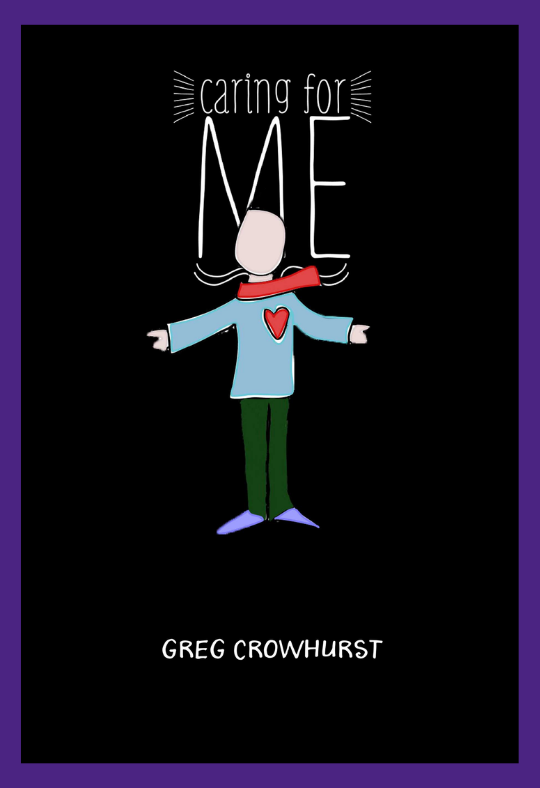
| More Information: If you'd like more in-depth and highly recommended guides to Severe M.E. and Caring, Greg has produced, “Caring For ME: a Pocketbook Course for Carers,” and, “Severe ME: Notes for Carers.” On Greg's MOMENT Approach, you can download for free, “The Care Needs of People with Severe ME”. And, on the lived experience of Severe and Very Severe M.E., visit the Stonebird website. |
Footnote:
The ME Association greatly appreciates all those who come forward to share their stories and experiences of living with M.E.
Talking about Real People with M.E. and the issues that affect them is arguably one of the best ways we have of raising awareness and it can help to bring us closer together as a community.
The ME Association
Real People. Real Disease. Real M.E.
We are a national charity working hard to make the UK a better place for people whose lives have been devastated by an often-misunderstood neurological disease.
If you would like to support our efforts and help ensure we can inform, support, advocate and invest in biomedical research, then please donate today.
Please visit our JustGiving page for one-off donations, to establish a regular payment or to create your own fundraising event.
ME Association Registered Charity Number 801279