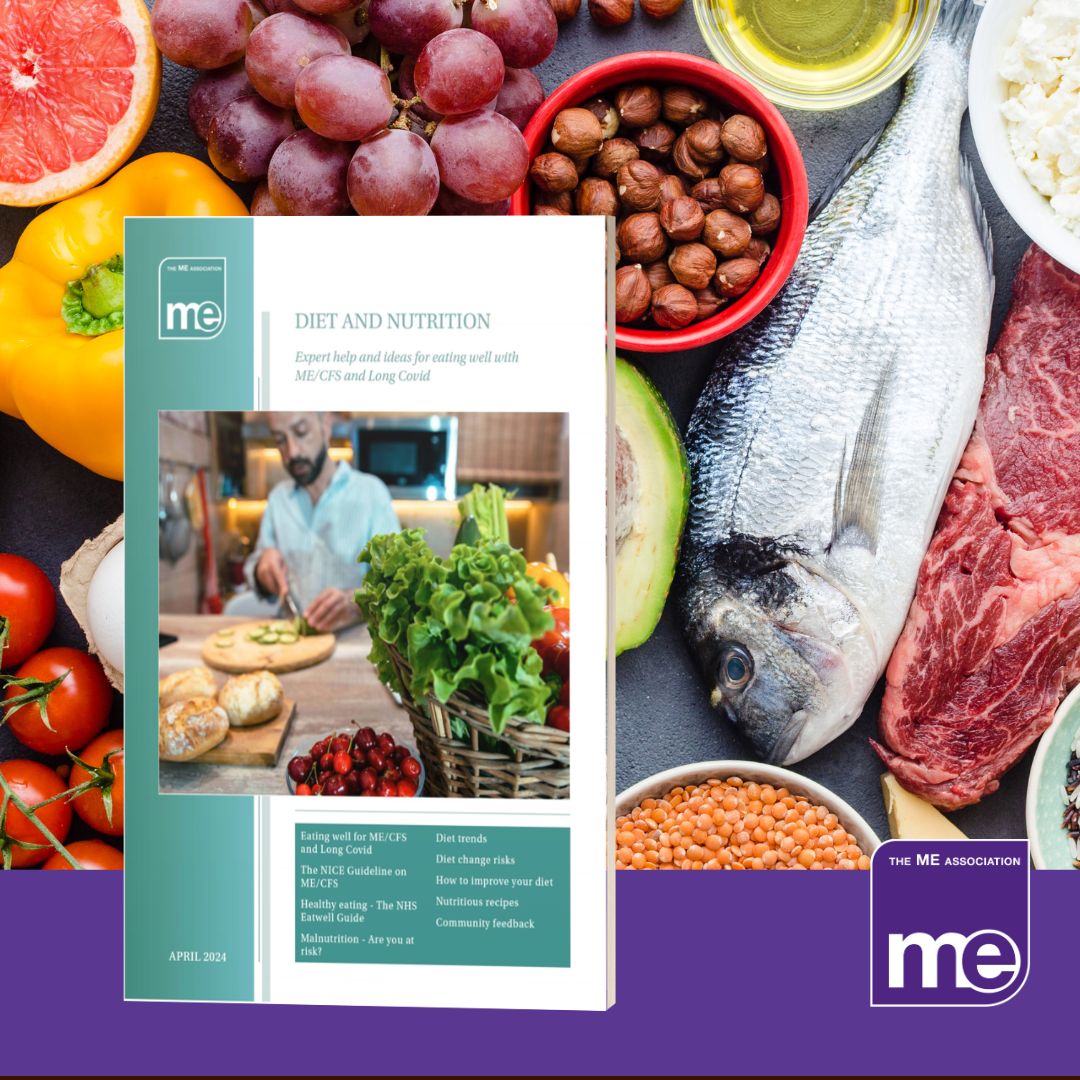
We examine the role of diet, how it can help to improve health when suffering from ME/CFS and Long Covid and ways we could improve what we eat and how we eat it. We consider malnutrition and how essential nutrition should be provided when severely or very severely affected. And, we share diet trends and tips and answer commonly asked questions from the patient community.
Read the document summary below or download the whole booklet.
The Basics
- Try to eat a balanced diet. This helps your energy, your immune system, and how you feel.
- For ME/CFS, follow the NHS Eatwell Guide (a mix of different food groups).
- For Long Covid, a Mediterranean-style diet is often recommended (more fish, beans, nuts, and olive oil).
- Both diets agree on this: eat less processed food, more veg, and more wholegrains.
What Your Doctor Should Do
- Make sure you’re drinking enough fluids and eating a balanced diet.
- If you feel sick (nausea), eat small amounts often — don’t skip meals or drinks.
- Send you to a dietitian if you’re losing weight, gaining weight, or on a restrictive diet.
- Check your Vitamin D, especially if you’re housebound.
- Not tell you that supplements will cure ME/CFS — there’s no proof they do.
- If you’re severely affected, support might include small frequent meals, nourishing drinks, soft foods, or feeding support. Trouble eating or swallowing is a physical problem — not a mental health one.
Simple Eating Guide
- Carbohydrates (bread, rice, pasta, potatoes): eat some at every meal. Choose wholegrain where you can.
- Protein (beans, fish, meat, eggs): eat 2 portions a day. Eat more fish and beans, less processed meat.
- Fruit and veg: aim for 5 portions a day. Fresh, frozen, and tinned all count.
- Dairy (milk, cheese, yoghurt): good for calcium. Choose lower-fat versions.
- Treats (cakes, crisps, sugary drinks): fine sometimes, in small amounts.
- Calories: you may need fewer than the standard guide suggests, since you’re less active. A dietitian can help you find the right amount.
Watch Out for Malnutrition
Not eating enough can make you more tired, weaker, and slower to heal. It can happen even if you’re overweight. Warning signs: hair loss, sunken eyes, brittle nails, and losing muscle. If you’re worried about your weight or how much you’re eating, see your GP.
Popular Diets — Do They Work?
- Processed food: try to eat less of it, but some (like wholegrain bread) is still healthy.
- Vegan diets: can be healthy, but take a B12 supplement, since it’s only in animal foods.
- Low-histamine diet: can help some people, but it’s tricky — get help from a dietitian.
- Keto diet: very restrictive. Not enough evidence yet that it helps ME/CFS.
- Be careful of any diet that claims to “cure” ME/CFS or Long Covid. There’s no proof for these claims.
Common Problems and What Helps
- Cutting out foods: don’t cut out whole food groups without good reason — you could miss out on nutrients.
- Stomach trouble: get checked by your GP first, in case it’s something else. Ask for a dietitian if it continues.
- Feeling sick: try small, dry, cold foods like crackers or toast. Sip drinks slowly.
- Weight changes: if your weight changes a lot without trying, tell your GP. Some medicines cause weight gain.
- Food allergies or intolerance: ask your GP for proper testing. Avoid unproven online allergy tests.
- Caffeine and alcohol: some people feel worse after these. Try cutting down and see if you feel better.
- Sleep: avoid caffeine in the evening. Try to sleep at night, not in the day, if you can.
- Dizziness on standing (PoTS): more fluids and salt may help — but only if your doctor says so.
- Meal timing: small, regular meals help keep your energy steadier than big or skipped meals.
Tips to Make Eating Easier
- Use frozen or ready-chopped veg to save energy.
- Cook extra and freeze portions for bad days.
- Keep simple, no-effort meals ready, like beans on toast or a microwave meal.
- Keep water and snacks close by, so it’s easy to stay hydrated.
- Ask family or friends to help with food prep when you can.
When to See Your GP
See your GP if you: lose weight without trying, have blood in your poo, have ongoing tummy pain, or notice a big change in your bowel habits. Ask about seeing a dietitian who understands ME/CFS or Long Covid. For more detail, recipes, and sources, read the full booklet.

