
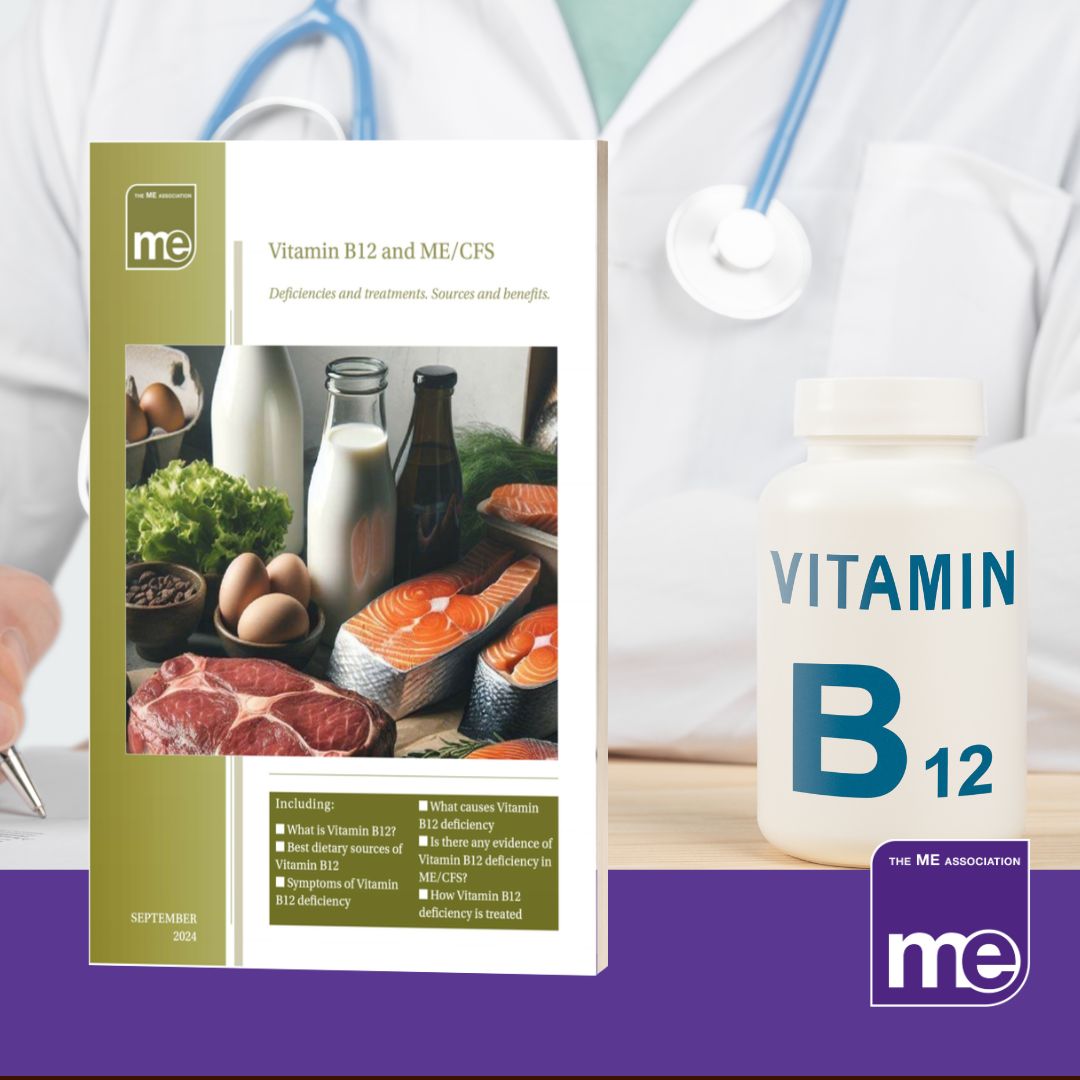
This comprehensive booklet covers everything you need to know about B12 and ME/CFS, including what food groups are a good source of this vitamin, the benefits of B12, information regarding deficiency and possible treatments.
You can read below or download the whole PDF leaflet.
Introduction
Vitamin B12 and ME/ CFS was written by Dr Charles Shepherd, Trustee and Hon. Medical Adviser to The ME Association
The ME Association receives regular queries and feedback relating to the use of vitamin B12 supplements in ME/CFS. Vitamin B12 used to be prescribed by doctors as a ‘tonic’ for people with a wide variety of complaints, especially those involving fatigue. However, it is no longer used in this way due to the lack of any sound evidence that ‘tonics’ actually work. So what is vitamin B12? Is there any evidence of vitamin B12 deficiency in ME/CFS? And could vitamin B12 be a safe and effective form of treatment for ME/CFS?
Key points
- Vitamin B12 deficiency is linked to a potentially serious type of anaemia called pernicious anemia – where there are abnormally large red blood cells.
- Vitamin B12 deficiency causes fatigue and other ME/CFS-like symptoms – so it should be excluded before a diagnosis of ME/CFS is made, especially in people where there is no clear infective onset.
- There is no evidence that vitamin B12 deficiency occurs as part of the underlying disease process in ME/CFS.
- People with ME/CFS may be at risk of vitamin B12 deficiency if they have a diet that is low in vitamin B12-containing foods – especially meat, dairy and fish.
- There is no evidence that vitamin B12 supplements are of any value in treating ME/CFS.
- Vitamin B12 supplements and B12 fortified foods will affect B12 blood test results. You should therefore discuss stopping supplementation with your doctor before being tested for Pernicious Anaemia or other malabsorption (such as Crohns, Coeliac, etc) causes of B12 deficiency. Pernicious Anaemia is an auto-immune disease which prevents vitamin B12 being absorbed through the digestion process and therefore requires treatment by injection.
- If you are going to take any sort of vitamin B12 supplement, please make sure that Pernicious Anaemia has been excluded as a possible cause of symptoms.
What is vitamin B12?
Vitamin B12 is involved in energy production, tissue and cell repair, nerve health, and the production of red blood cells that carry oxygen around the body. So we all need a regular dietary supply, along with good intestinal absorption, of this vital vitamin.
Which are the best dietary sources of vitamin B12?
Good dietary sources include meat, salmon, milk, eggs, some fortified breakfast cereals, and yeast extract – including Marmite. Fruit, grains and vegetables do not contain vitamin B12. A healthy balanced diet containing meat, poultry, seafood, and dairy produce should therefore be providing more than enough. And as the body stores several years supply of vitamin B12 in the liver it can take some time before any signs of deficiency appear. Taking extra vitamin B12 in the form of over-the-counter supplements isn’t therefore necessary or sensible – unless you are at increased risk of developing a deficiency or a deficiency of vitamin B12 has been identified.
What are the symptoms of vitamin B12 deficiency?
Vitamin B12 is required for a wide range of body functions. So it can cause an equally wide range of symptoms – some of which are related to nerve damage (neuropathy). The symptoms often develop gradually over a period of time and include several symptoms that can also occur in ME/ CFS. These include:
- Fatigue and lack of energy
- Muscle weakness or clumsiness in the hands or feet
- Problems with balance and/or walking
- Visual disturbances
- Problems with short-term memory, concentration, judgment, even confusion n Paraesthesiae (pins and needles sensations in the skin) and numbness
- Headaches Neurological changes due to vitamin B12 deficiency may develop gradually in the absence of any clear changes in the blood profile.
- Palpitations (due to the anaemia)
- Tinnitus – hearing strange noises in the ears
Vitamin B12 deficiency should therefore form part of the clinical assessment and differential diagnosis of ME/CFS, especially where there is no clear infective onset or where prominent neurological symptoms are present.
Symptoms and signs that are not characteristic of ME/CFS include:
- Breathlessness due to anaemia
- Mood changes, including depression, anxiety and even psychosis n Sore red tongue (glossitis)
- Mouth ulcers
- Loss of appetite and weight
- Pale yellow tinge to the skin
- Subtle deterioration in eyesight
A long-term and more severe deficiency of vitamin B12 can lead to serious neurological complications, including spinal cord degeneration (causing severe weakness and poor co-ordination) and heart failure. Neurological changes due to vitamin B12 deficiency may develop gradually in the absence of any clear changes in the blood picture.
Similar symptoms can also occur when there is a deficiency of an important nutrient called folate – which produces an anaemia with larger than normal red blood cells.
What causes vitamin B12 deficiency?
Overall, vitamin B12 deficiency affects around 5% of people aged 65 – 74 and 10% of people aged 75 or over. There are several ways in which people can develop vitamin B12 deficiency:
- Pernicious anaemia
- Pernicious anaemia is the commonest cause of vitamin B12 deficiency in the UK. It is more common in women around the age of 60, especially when they have other autoimmune conditions.
- Pernicious anaemia is an autoimmune disease where the body’s immune system produces harmful antibodies (autoantibodies) against its own tissues. Whilst there is some evidence to indicate that ME/CFS has an autoimmune component, there is no evidence that pernicious anaemia is more common in people with ME/CFS.
- In the case of pernicious anaemia, the immune system produces antibodies against healthy cells in the stomach where a molecule called intrinsic factor, which helps vitamin B12 to be absorbed further down in the small intestines, is produced.
- Lack of vitamin B12 in the diet
- Although uncommon, this can occur in vegans and people who avoid meat, dairy and fish, or who are on some form of very restricted diet and do not take any foods that are fortified with vitamin B12 or a vitamin B12 supplement.
- Drugs
- A number of drugs can interfere with vitamin B12 absorption. These include colchicine, H2 receptor antagonists, metformin, pregabalin, primidone, proton pump inhibitors and topiramate. Oestrogen-containing oral contraceptives can reduce vitamin B12 levels – as can pregnancy.
- It has recently been found that recreational use of nitrous oxide gas inactivates vitamin B12 in the body.
- Decreased absorption from the gastrointestinal tract
- This can be caused by previous abdominal surgery (e.g. gastrectomy – stomach removal) and intestinal conditions such as Crohn’s disease and coeliac disease which can cause a decrease in absorption of vitamin B12 from the small intestine.
- Functional vitamin B12 deficiency
- This is where there is a problem with proteins that transport vitamin B12 between cells. This can also cause neurological complications involving the spinal cord.
Vitamin B12 in vegan and plantbased diets
Information from Sue Luscombe, MEA professional adviser on diet and nutrition.
Vegan and plant-based diets are growing in popularity and can be very healthy. However, care needs to be taken as vitamin B12 is only found in animal products and therefore is not naturally present in a vegan diet. The only way to ensure a reliable intake if you are on a Vegan or plant-based diet is to take fortified foods and supplements.
- Fortified foods
Vitamin B12 is added to some alternatives to milk products, vegan spreads, nutritional yeast flakes, yeast extracts and breakfast cereals. Eat these foods at least twice a day. - Supplements
Aim for a daily intake of at least 3mcg (micrograms) by taking at least 10mcg daily or at least 2000mcg weekly. The higher figure for the weekly supplement is for poor absorption of a single dose, hence why so much more needed) . - The Vegan Society website has lots of help on how to achieve this: https://www.vegansociety.com/
How is vitamin B12 deficiency diagnosed?
Vitamin B12 deficiency results in the bone marrow producing abnormal blood cells that are larger than normal – megaloblastic cells. These red blood cells do not work as efficiently as normal red cells. The resulting anaemia is called a macrocytic (large cell) anaemia. However, it’s important to note that vitamin B12 deficiency can occasionally occur without evidence of anaemia or macrocytosis.
Blood tests measure what is called total B12 (serum cobalamin) and active B12 (serum holotrans cobalamin). The most commonly used test is total B12 – which measures both active and inactive B12. The active B12 test is more accurate because it measures the amount of vitamin B12 that can be taken up and used by the body.
Second line tests, where use and availability are limited, include plasma methylmalomic acid and plasma homocysteine. Testing for intrinsic factor antibody can help to confirm the diagnosis of an autoimmune disease process.
The level of folate, which causes similar symptoms, should be checked at the same time to exclude the possibility of co-existent folate deficiency anaemia.
Is there any evidence of vitamin B12 deficiency in ME/CFS?
- At present, there is no sound scientific evidence to demonstrate that vitamin B12 deficiency is present in ME/CFS.
Is there any evidence that vitamin B12 is a safe and effective treatment for ME/CFS?
As there is no sound evidence of vitamin B12 deficiency in ME/CFS, and no evidence from a good-quality, placebo-controlled clinical trial to show that vitamin B12 is an effective form of treatment for ME/ CFS, this is not a form of treatment that can be recommended.
However, there has been some feedback from a research group in Sweden. They reported that in a survey of 38 ME/CFS patients who had been receiving vitamin B12 injections in combination with folic acid at least once a week for six months, 15 reported a good response and 23 reported a mild response.
Abstract: https://pubmed.ncbi.nlm.nih.gov/31616305/
The MEA receives regular feedback from people who feel that using vitamin B12 has been beneficial and there are also some doctors who believe it is effective. The MEA has therefore discussed the possibility of funding a clinical trial that would assess the safety and efficacy of assessing the use of a vitamin B12 supplement in ME/CFS.
In the NICE guideline on ME/CFS, vitamin supplements are not recommended as being necessary for people with ME/CFS. So most doctors are reluctant to prescribe vitamin B12 injections to people with ME/CFS in our current state of knowledge – unless there are sound reasons for doing so. Most doctors are reluctant to prescribe vitamin B12 injections to people with ME/ CFS in our current state of knowledge – unless there are sound reasons for doing so.
Vitamin B12 injections do not normally produce any serious side-effects. Minor side-effects can include fever, headache, nausea and dizziness.
However, it is really important to make sure that a diagnosis of pernicious anaemia has been excluded before undertaking any form of self-treatment with vitamin B12. This is because some symptoms of pernicious anaemia can overlap with ME/CFS and, if pernicious anaemia is not properly treated, this could cause permanent and serious damage to the nerves in the spinal cord – a condition called sub-acute combined degeneration of the spinal cord.
How is vitamin B12 deficiency treated?
This will depend on the cause. If there is a lack of vitamin B12 in the diet, vitamin B12 tablets in conjunction with increasing the amount of good dietary sources of vitamin B12.
If there is a problem with intestinal absorption, as happens with pernicious anaemia, then vitamin B12 has to be given by an injection containing hydroxocobalamin – which is retained in the body longer than cyanocobalamin. Tablets or mixtures cannot be absorbed in the case of pernicious anaemia.
Pernicious anaemia is a lifelong condition that can cause serious neurological problems if untreated or not properly treated. So treatment with injections has to be for life. After the initial course of treatment injections are then normally given every three months. If folate deficiency is also identified, folic acid tablets are prescribed.
Further Information
- The NICE guideline on vitamin B12 describes how people should be assessed and managed who have a blood test that indicates varying degrees of vitamin B12 deficiency: https://www.nice.org.uk/guidance/ng239
- Pernicious Anaemia Society: https://pernicious-anaemia-society.org/
- Information about blood tests for Vitamin B12: https://labtestsonline.org.uk/
- Information about pernicious anaemia and sub-acute combined degeneration of the spinal cord: https://www.mountsinai.org/care
- NICE do not recommend the use of vitamin B12 in ME/CFS, or as a treatment for undiagnosed fatigue. This has led to disciplinary action by the GMC: https://meassociation.org.uk/2014/07/acclaimed-county-durham-doctor-banned-from-prescribing-vitamins-the-journal-newcastle-8-july-2014/ https://tinyurl.com/5y9yaw6s